Legendary Soviet Athletes Who Became Cold War Icons
When Sport Became a Weapon of the State
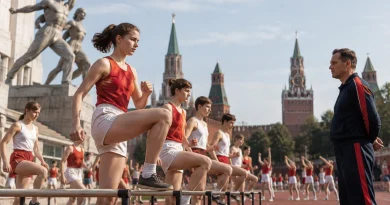
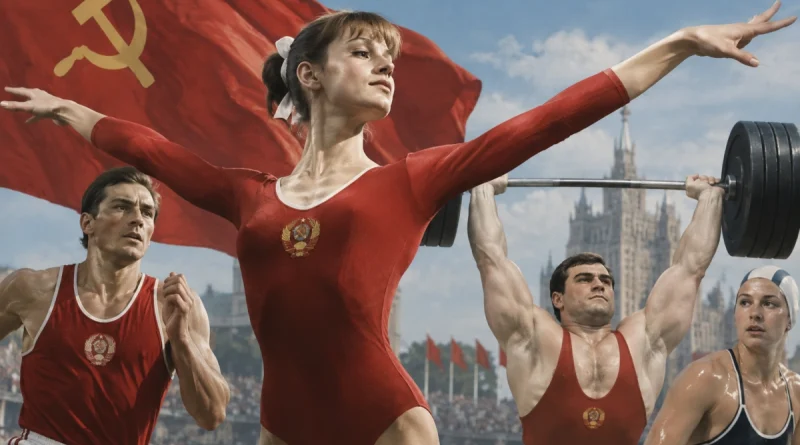
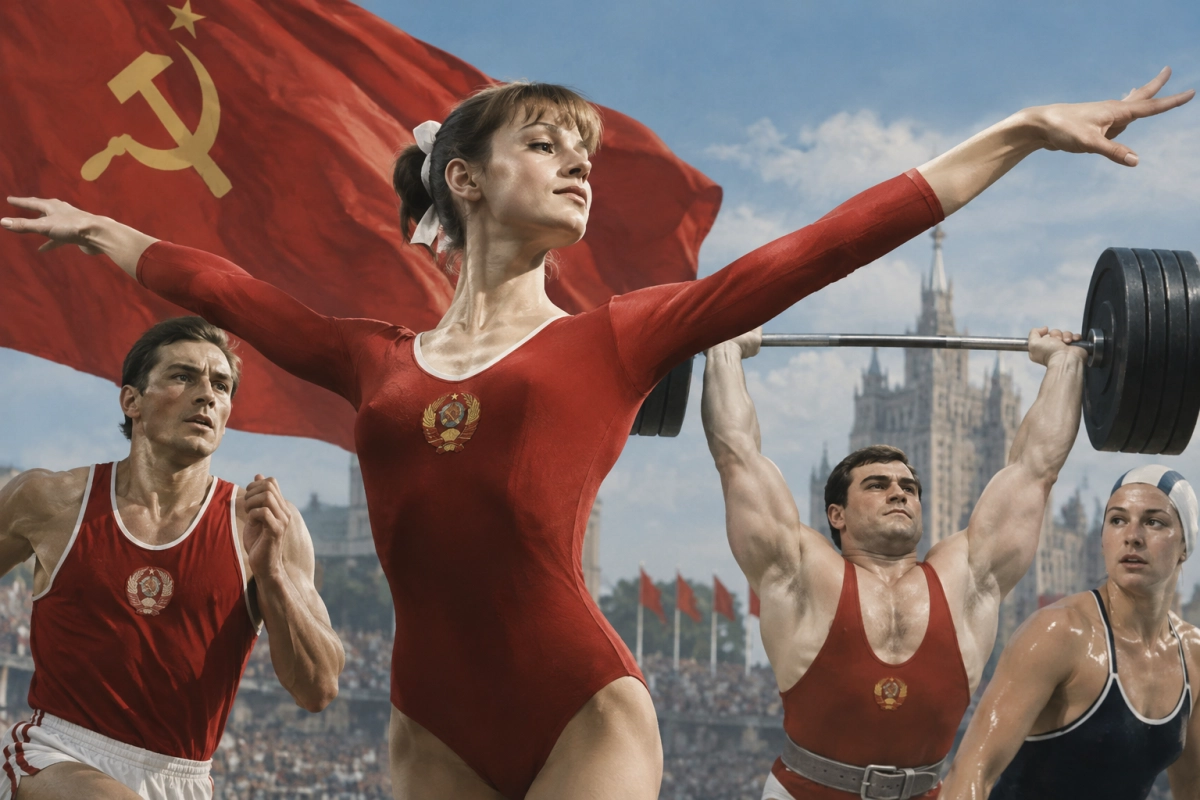
Few eras fused athletic achievement with political meaning as thoroughly as the Cold War. Starting in 1952, when the USSR entered Olympic competition for the first time at the Helsinki Games, Soviet sportisti stopped being mere competitors and became instruments of national prestige. Moscow understood early that stadiums, pools, and gymnastics arenas offered a stage where ideological superiority could be demonstrated without firing a single shot. A 1948 government directive had already made this explicit, calling for Soviet athletes to achieve “world supremacy” in major sports — a policy goal as much about geopolitics as physical performance.
This context matters enormously when examining the individual careers that followed. The men and women who rose through Soviet sports academies were not simply gifted athletes chasing personal glory. They were, whether they embraced it or not, symbols of a system competing against the West for legitimacy. Every gold medal became a data point in a larger argument about which ideology produced stronger, more disciplined, more “cultured” citizens — a word Pravda itself used to describe one of the era’s greatest strongmen. Understanding figures like Larisa Latynina, Valery Brumel, and Yuri Vlasov requires holding both realities at once: extraordinary individual talent, and the machinery of a state determined to showcase it.
Larisa Latynina and the Making of a Gymnastics Dynasty
Few athletes embody Soviet sporting dominance as completely as Larisa Latynina. Competing between 1956 and 1964, she amassed fourteen individual Olympic medals alongside four team medals, a haul that still anchors her among the most decorated Olympians in history. Her nine Olympic gold medals in gymnastics remain a record unmatched by any gymnast since, a statistic that transcends simple athletic excellence and enters the realm of institutional legend.
Latynina’s rise paralleled the broader development of Soviet gymnastics as a showcase discipline. Training systems built around state-sponsored clubs produced not just one exceptional athlete but a sustained pipeline of champions, reinforcing the narrative that Soviet methodology itself was superior. Her grace under the sport’s demanding precision became, in the propaganda calculus of the era, proof that the Soviet system could cultivate both power and artistry — a combination Western commentators struggled to dismiss.
Brumel’s Ascent and the Weight of Vlasov’s Records
If Latynina represented sustained dominance, Valery Brumel embodied dramatic peak achievement. His high jump prowess culminated in Olympic gold in 1964, establishing him as one of track and field’s most compelling figures before a motorcycle accident in 1965 abruptly ended his international career. The brevity of his prime only intensified the mythology surrounding him.
Meanwhile, in weightlifting, Yuri Vlasov delivered a moment of pure spectacle at the 1960 Rome Olympics, becoming the first man to clean and jerk over 200 kilograms. The feat earned him the title “Strongest Man on the Planet” and attention from the Kremlin itself — Khrushchev reportedly favored him, and Brezhnev later offered him an advisory role. These were not isolated athletic triumphs but carefully amplified national moments, each one feeding into a larger story the Soviet Union was determined to tell the world.
Vlasov’s Literary Rebellion and the Limits of State Loyalty
What made Yuri Vlasov unusual among Soviet champions was not merely his strength but his refusal to remain a silent instrument of the apparatus that celebrated him. He wrote — openly, and with increasing candor as his career wound down — about the corrosive effects of a sports bureaucracy that treated athletes as disposable assets once their records stopped accumulating. His later writings criticized the very system that had elevated him, describing the psychological toll of competing not for oneself but for an abstract national ideal enforced by coaches, officials, and Party minders alike.
This tension reveals something essential about the Soviet sporting project that the medal counts alone obscure. The state needed its champions to appear as natural products of socialist life, effortlessly superior, yet the reality behind the scenes involved intense pressure, rigid oversight, and little tolerance for athletes who deviated from the script. Vlasov’s later turn toward politics — he would go on to run for office in the post-Soviet era — suggests a man who understood his own symbolic value all too well, and who spent much of his later life trying to reclaim a narrative that had once been written for him rather than by him.
The Gymnastics Pipeline Beyond Latynina
Latynina’s achievements did not exist in isolation; they were the most visible output of an institutional machine designed to replicate success across generations. Soviet sports academies operated on a model of early identification, funneling promising children — often as young as five or six — into specialized training tracks years before their Western counterparts had even begun formal competition. This system prized consistency as much as individual brilliance, and it explains why Soviet gymnastics remained a dominant force for decades rather than peaking with a single golden generation.
The approach carried obvious costs, many of which only became publicly known after the Soviet collapse. Training regimens for young gymnasts were often brutally demanding, with little room for injury, dissent, or the ordinary setbacks of adolescence. Yet from a propaganda standpoint, the model worked precisely as intended: it generated a continuous stream of Olympic-caliber talent that reinforced, Games after Games, the idea that Soviet sport was not a product of isolated genius but of systemic, reproducible excellence.
- Early talent identification programs that scouted children before age ten
- Specialized boarding schools pairing academic study with intensive athletic training
- Centralized coaching philosophies designed to standardize technique nationwide
- State funding structures that insulated elite programs from the economic hardships affecting ordinary citizens
Brumel’s Fall and the Fragility Beneath the Myth
Brumel’s 1965 motorcycle accident did more than end a career — it exposed how precarious the Soviet sporting myth truly was. A system built on the premise of inevitable, engineered triumph had no real script for sudden human fragility. Brumel underwent numerous surgeries in an effort to salvage his leg and his career, and while he never fully reclaimed his Olympic form, his dogged attempts to return captured public sympathy in a way that pure victory rarely had.
In some respects, this made him more relatable than the record books ever could. His later years, spent partly as a writer reflecting on both athletic glory and its abrupt loss, offered a rare glimpse of a Soviet icon grappling publicly with vulnerability — a counterpoint to the invincible image the state preferred to project.
What Remains When the Medals Are Counted
Decades after the last Soviet flag was raised at an Olympic podium, the stories of Latynina, Brumel, and Vlasov have outgrown the propaganda apparatus that once shaped them. What endures is not the ideological framing but the human texture underneath it: the discipline required to dominate a sport for nearly a decade, the courage to keep competing after a body has been shattered, the willingness to speak honestly about a system that offered glory with one hand and control with the other. These were not merely Cold War mascots. They were athletes who understood, in their own ways, that the price of becoming a symbol was the risk of losing themselves inside it.
Modern sports historians, along with organizations like the International Olympic Committee, continue to revisit this period not simply to tally records but to understand how political systems shape — and sometimes consume — the athletes who serve them. That ongoing reassessment is perhaps the truest legacy of this generation: proof that even within a state engineered to erase individuality, remarkable people found ways to let their own stories, flaws and all, survive the ideology that tried to write them first.