Najbolji Ruski Sportisti: A Cross-Disciplinary Ranking Through History
Why Ranking Russian and Soviet Athletes Requires a Different Lens
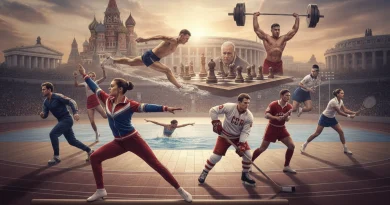
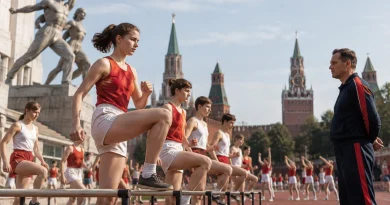
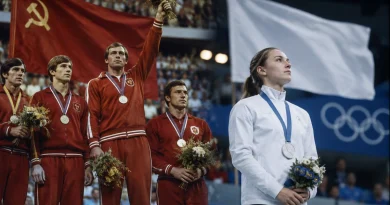
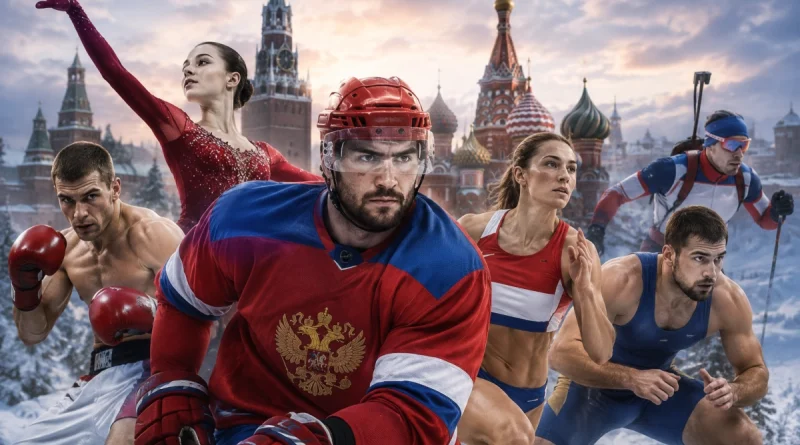
For most of the twentieth century, Soviet sport operated as something closer to a state enterprise than a loose collection of individual pursuits. Athletes were trained within a system engineered to dominate specific disciplines — gymnastics, wrestling, figure skating, ice hockey — and the results speak for themselves. The Soviet Union accumulated 473 Olympic gold medals before its dissolution, a tally second only to the United States’ 1,220, achieved across a far shorter competitive window. That density of success is precisely why ranking “najbolji ruski sportisti,” or the best Russian athletes, cannot rely on a single metric like gold-medal count alone.
Most existing rankings fall into one of two traps. Either they isolate a single sport — gymnastics-only or figure-skating-only lists — and crown champions within a narrow lane, or they blend eras and disciplines without any consistent criteria, producing lists that read more like trivia roundups than genuine evaluations. Neither approach answers the harder question: how does a wrestler who went unbeaten for over a decade compare to a gymnast who medaled across three Olympic cycles, or to a hockey player whose influence reshaped an entire league on another continent?
Building a Unified Framework: Medals, Longevity, and Influence
This ranking applies three criteria simultaneously, weighting each according to what it reveals about an athlete’s true stature. The first is raw medal accumulation — golds carry more weight than silvers, which carry more than bronzes, but total podium presence still matters as a signal of consistency. The second is longevity, meaning the number of years or Olympic cycles across which an athlete remained competitive at the highest level. A single dominant season is impressive; a decade of dominance is historic. The third criterion, arguably the hardest to quantify, is global influence — the degree to which an athlete altered how their sport was coached, officiated, or perceived internationally.
Consider Larisa Latynina, whose 18 Olympic medals (nine gold, five silver, four bronze) between 1956 and 1964 placed her second only to Michael Phelps in the all-time medal count, a record that stood unchallenged for decades. Nikolai Andrianov follows closely with 15 medals across the 1970s, his longevity in gymnastics rivaling Latynina’s own. Then there is Alexander Karelin, whose dominance didn’t come from medal volume but from an almost unprecedented 13-year unbeaten streak in Greco-Roman wrestling, a feat that earned him recognition as the greatest Greco-Roman wrestler of the twentieth century. Three athletes, three sports, three very different paths to greatness — and under a single evaluative framework, each deserves a place near the top.
Ice hockey complicates the picture further. Valeri Kharlamov, Sergei Makarov, Vyacheslav Fetisov, and Vladislav Tretiak occupy four of the six positions on the IIHF’s Team of the Century, a statistic that speaks to influence far beyond domestic Soviet competition — these were players who redefined international hockey itself. Weighing their impact against individual Olympic medal totals from gymnastics or wrestling requires careful calibration, which is exactly where the next section turns its attention.
Calibrating Across Eras: Why 1950s Dominance Isn’t 1980s Dominance
One of the quieter difficulties in any cross-era ranking is that the competitive landscape itself kept shifting. Latynina competed in a gymnastics field that was still consolidating its scoring standards and had far fewer nations fielding genuine medal threats. By the time Andrianov and later Vitaly Scherbo were competing, the Code of Points had tightened considerably, the East German and Romanian programs had matured into serious rivals, and the margin for error had shrunk to fractions of a point. Dominating a less crowded field still counts, but it cannot be weighted identically to dominating a field saturated with professionalized, state-funded competitors from half a dozen countries.
The same recalibration applies to wrestling and ice hockey. Karelin’s unbeaten run unfolded against an international circuit that, by the 1990s, had absorbed decades of accumulated technical knowledge, much of it originally Soviet in origin — meaning he wasn’t simply beating the same opposition his predecessors faced, but opposition sharpened partly by Soviet methodology itself. That context amplifies rather than diminishes his standing. Similarly, the generation of Soviet hockey players who faced Canadian professionals in the 1972 Summit Series were operating in a sport actively resistant to the idea that a non-NHL program could compete at the highest level; their success carried a persuasive weight that later generations, competing after that credibility was established, simply didn’t need to generate from scratch.
The Overlooked Middle Tier: Athletes Who Shaped Systems, Not Just Scoreboards
Rankings built purely on medal tallies tend to flatten out athletes whose primary contribution was structural rather than statistical. Irina Rodnina, for instance, won three consecutive Olympic figure skating golds with two different partners — a continuity of dominance across a full decade that also forced a wholesale reevaluation of how pairs skating was judged and choreographed internationally. Her influence on technical standards arguably outlasts her medal count in terms of lasting consequence, which is precisely the kind of case this framework is designed to surface rather than bury beneath flashier Olympic totals.
Chess-adjacent competitive sports present a related challenge, since achievement there rarely maps onto Olympic medal tables at all. Figures like Garry Kasparov operated within a points-and-rating system entirely distinct from podium counts, yet their dominance reshaped how an entire discipline was studied, taught, and broadcast worldwide — arguably a more durable form of global influence than a single Olympic cycle could produce. Including such figures in a “Russian and Soviet athletes” ranking requires stretching the definition of sport slightly, but excluding them would mean ignoring one of the clearest examples of sustained, system-altering dominance the Soviet sporting apparatus ever produced.
- Longevity across shifting competitive eras must be judged relative to the field, not in absolute isolation.
- Structural influence — on judging standards, coaching methodology, or international perception — deserves weight independent of medal count.
- Disciplines without traditional podiums still belong in the conversation when their global influence is demonstrably outsized.
Where the Ranking Settles — and Why It Resists a Single Name at the Top
After weighing medal density against longevity, and longevity against influence, what emerges isn’t a tidy podium but a layered hierarchy where different athletes win on different terms. Latynina holds the strongest statistical claim, a record so durable it survived four decades before Phelps eclipsed it. Karelin holds the strongest claim to pure dominance, having gone unbeaten for longer than many careers last. Rodnina and the Team of the Century hockey players hold the strongest claim to structural legacy, having changed the sports themselves rather than simply excelling within them. Kasparov sits slightly outside the traditional frame yet belongs for the same reason the others do: sustained, field-altering supremacy.
That refusal to collapse into a single “greatest ever” is, in a sense, the point. Soviet and Russian sport produced excellence across too many disciplines, eras, and definitions of success for one metric to do it justice. A framework built on medals, longevity, and influence doesn’t resolve that tension so much as make it legible — showing precisely why a gymnast, a wrestler, a skater, and a chess grandmaster can all belong in the same conversation without one erasing the others’ claim to greatness.
For readers wanting to trace how international federations themselves have historically weighed these legacies, the International Olympic Committee remains the most authoritative record of the medal counts underpinning much of this analysis.
What stays constant, regardless of discipline, is the pattern beneath the names: sustained excellence under shifting competitive pressure, measured not by a single golden year but by a body of work that reshaped what the rest of the world believed possible. That, more than any single statistic, is the throughline connecting Latynina to Karelin to Kasparov — and it’s the standard against which any future contender, Russian or otherwise, will inevitably be measured.