Olimpijski Šampioni Rusija: Od Sovjetske Zlatne Ere do Statusa Neutralnih Sportista
A Sporting Empire Built on Ideology and Iron Discipline
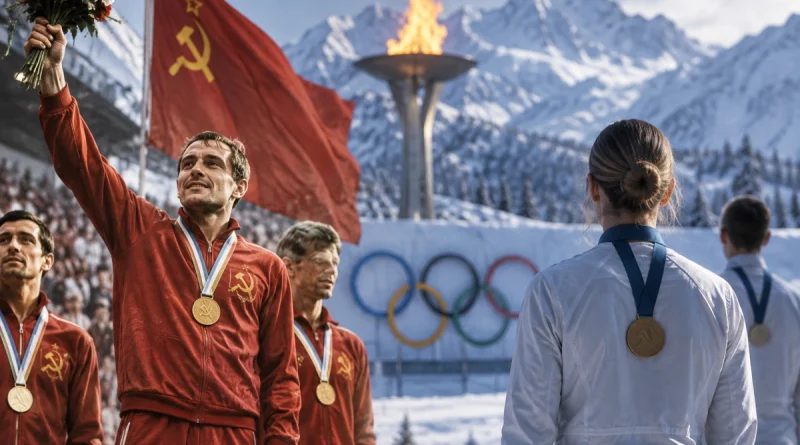
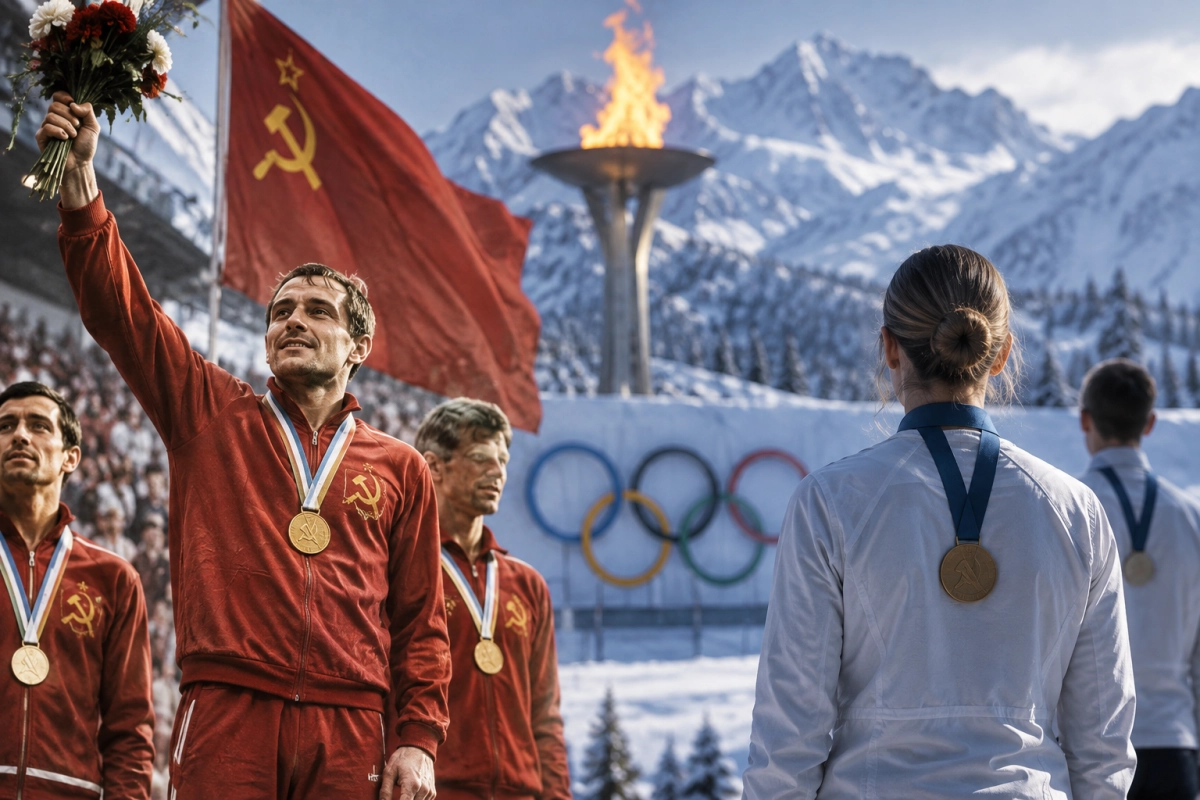
For much of the twentieth century, the Soviet Union treated Olympic success as a matter of state prestige rather than individual achievement. From its first appearance at the 1952 Helsinki Games, the USSR positioned itself as a counterweight to Western athletic dominance, pouring resources into state-sponsored training systems that identified talent early and refined it through rigorous, centralized programs. The results spoke for themselves: within a few Olympic cycles, Soviet athletes were routinely topping medal tables once considered the exclusive territory of the United States.
This wasn’t accidental. The Soviet sports machine operated on a philosophy that merged physical culture with political messaging, producing champions who became living symbols of socialist achievement. Gymnasts, wrestlers, and weightlifters emerged as the pillars of this system, sports where technical precision and sheer physical dominance could be measured, televised, and celebrated as proof of a superior model. The legacy of that era still shapes how fans and historians discuss olimpijski šampioni Rusija today, even as the political context around them has shifted dramatically.
Gymnasts, Wrestlers, and the Weightlifting Giants Who Defined an Era
Few figures embody Soviet Olympic supremacy as clearly as Vasily Alekseyev, the two-time Olympic weightlifting champion whose raw strength made him a global icon of the discipline. His dominance wasn’t an isolated case—Soviet weightlifters and wrestlers consistently filled podiums through the 1960s, ’70s, and into the ’80s, backed by sports science programs that Western nations struggled to replicate.
Gymnastics told a similar story. Soviet gymnasts, both men and women, became fixtures atop the medal stand, their routines praised not just for athleticism but for an almost theatrical command of the apparatus. Wrestling followed the same pattern, with Soviet competitors across weight classes treating the mat as another arena for demonstrating ideological superiority through sheer technical mastery.
What made this golden age remarkable wasn’t just the volume of medals—it was the consistency. Generation after generation, the system produced champions who understood that failure carried consequences beyond sport. This created an athletic culture of extraordinary intensity, one that would eventually have to confront the collapse of the very state that built it.
When the Union Dissolved, the Medals Didn’t Stop
The breakup of the Soviet Union in 1991 could have ended this dominance outright. Instead, the transition period produced the Unified Team at the 1992 Barcelona Games—a temporary coalition of former Soviet republics competing under a neutral banner, still remarkably successful despite the political chaos surrounding it. This moment, often overlooked in broader retrospectives, foreshadowed a reality that Russian athletes would face again decades later: competing without a flag, without an anthem, yet still expected to perform at an elite level.
From there, the Russian Federation began building its own Olympic identity, inheriting both the infrastructure and the expectations of its Soviet predecessor. The question became whether post-Soviet Russia could sustain that legacy under entirely different political and economic circumstances—a transition that reshaped the next three decades of Russian Olympic history.
The Post-Soviet Generation Finds Its Own Icons
Russia’s first decade as an independent Olympic nation produced athletes who had to redefine what greatness looked like without the ideological scaffolding that once surrounded it. Alexander Karelin, the Greco-Roman wrestling colossus who went unbeaten for over a decade, became the clearest bridge between eras—trained in the Soviet system but reaching the peak of his fame as a symbol of the new Russia. His near-mythical status, built on a combination of physical dominance and an almost unsettling calm under pressure, showed that the old discipline hadn’t vanished with the Union; it had simply found a new flag to compete under.
Synchronized swimming and rhythmic gymnastics became quieter but equally dominant fronts. Russian athletes in these disciplines didn’t just win medals—they won nearly everything, turning entire Olympic cycles into formalities before the competition even began. This dominance extended into figure skating, where Russian pairs and ice dancers consistently delivered performances that blended technical complexity with an artistry Western judges struggled to match. The pattern suggested that Russia hadn’t lost its capacity for systemic excellence; it had redirected that capacity into sports better suited to a new national image focused on elegance and endurance rather than raw ideological muscle.
Sochi 2014 and the Weight of a Home Games
Nothing tested this post-Soviet identity more than the 2014 Winter Olympics in Sochi. Hosting the Games on home soil carried enormous symbolic weight, and Russian athletes responded with a medal haul that briefly restored the sense of untouchable dominance associated with the Soviet decades. Figure skaters, short-track speed skaters, and cross-country specialists delivered performances that turned the host nation into the story of the Games.
Yet Sochi’s legacy became far more complicated in the years that followed, as revelations about systemic doping practices surrounding the Games unraveled much of that triumph. What had looked like a crowning achievement for Russian sport instead became the starting point for a long reckoning—one that would eventually reshape how Russian athletes were allowed to compete at all.
Sanctions, Scandals, and the Rise of the “Neutral” Athlete
The years following Sochi saw Russian sport enter a period defined less by medal counts and more by investigations, bans, and appeals. Doping scandals led to sweeping sanctions from international bodies, stripping Russia of its right to compete under its own flag at multiple Olympic Games. Athletes who had trained their entire lives within a system built on national pride suddenly found themselves competing as anonymous entries—listed without country, without anthem, identified only by acronyms like “OAR” or “ROC” depending on the Games in question.
This arrangement created an uncomfortable paradox. The athletes themselves, many with no connection to the doping violations, were asked to carry the consequences of institutional failures far above their control. Olympic officials framed neutral status as a compromise that preserved individual competition rights while still punishing systemic wrongdoing, but for many Russian competitors, it felt like inheriting a penalty written long before they ever stepped onto the ice or the mat.
Then came a second wave of restriction, this time rooted not in doping but in geopolitics, as international sanctions following Russia’s invasion of Ukraine further isolated Russian athletes from global competition. The combination of these two crises—one scientific, one political—has left Russian Olympic sport in a state unlike anything the Soviet founders of this athletic empire could have imagined: still producing extraordinary talent, yet increasingly disconnected from the flags, anthems, and national recognition that once defined its entire purpose.
A Legacy That Outlasts the Flag
What remains, after all the political upheaval and institutional reckoning, is a strange kind of continuity. The names change, the banners change, the anthems disappear entirely in some editions of the Games, yet the underlying current of Russian athletic excellence hasn’t dried up. A gymnast training in a quiet regional facility today still inherits the same demand for precision that shaped Soviet champions seven decades ago. A wrestler stepping onto the mat still carries echoes of Karelin’s discipline, even if the scoreboard lists no nation beside their name.
This is perhaps the most revealing truth to emerge from the entire arc of Russian and Soviet Olympic history: the system was always bigger than the symbols attached to it. Flags, anthems, and medal tallies gave the achievements their visibility, but the culture of relentless preparation—the thing that actually produced champions—was never dependent on those symbols to exist. Stripped of them, as current “neutral” athletes have been, that culture persists almost defiantly, as if proving that greatness was never really about the insignia in the first place.
Whether this era of neutrality proves temporary or becomes a lasting feature of how Russian athletes engage with the Olympic movement remains an open question, one tied closely to diplomatic developments far outside the control of athletes or coaches. Organizations like the International Olympic Committee will continue shaping the terms under which these competitors are allowed to participate, but the deeper story—the one spanning Alekseyev’s barbell, Karelin’s mat, and Sochi’s ice—suggests that Russian sport has survived far more dramatic ruptures than this one. It adapted when an empire dissolved beneath it. It may yet adapt again, finding new ways to define victory even when victory no longer comes with a name attached.