The Greatest Russian Athletes of All Time: A Definitive Ranking Across Every Era
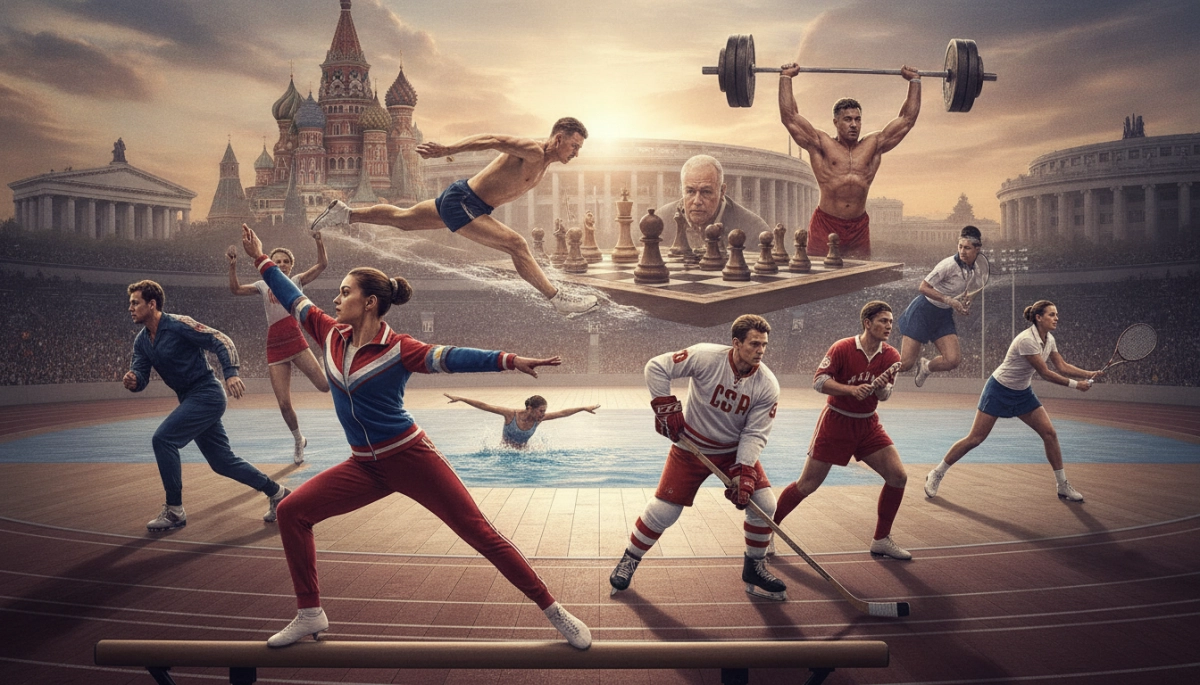
From the Soviet Machine to the Global Stage: Why Russian Sport Demands a Reckoning
No serious conversation about global sporting achievement can sidestep Russia’s contribution. For the better part of the twentieth century, the Soviet Union operated the most sophisticated state-sponsored athletic program the world had ever seen — built not just to produce winners, but to use sport as a demonstration of ideological superiority. Olympic medal tables were dominated. World records shattered. Names emerged that still resonate decades later, among both historians and fans who watched in real time.
When the Soviet Union dissolved in 1991, that infrastructure fractured — but the talent pipeline did not. Russia continued to produce world-class athletes across tennis, ice hockey, gymnastics, and athletics. The story of Russian sport is therefore not a single chapter but a continuous, layered narrative that rewards careful attention.
This ranking spans eras, disciplines, and cultural contexts to identify the athletes who have defined Russian and Soviet sport at the highest level. The criteria are deliberate: sustained excellence, influence on their discipline, and the degree to which their careers left a mark beyond scoreboards. The result is a portrait of what it has meant — across generations — to be among the finest athletes this region has produced.
Why Rankings Like This Are More Than a Greatest-Hits List
Ranking athletes across different sports and eras is, by nature, imprecise. What a carefully assembled ranking can do, however, is illuminate patterns — recurring qualities that define Russian athletic greatness regardless of discipline or decade.
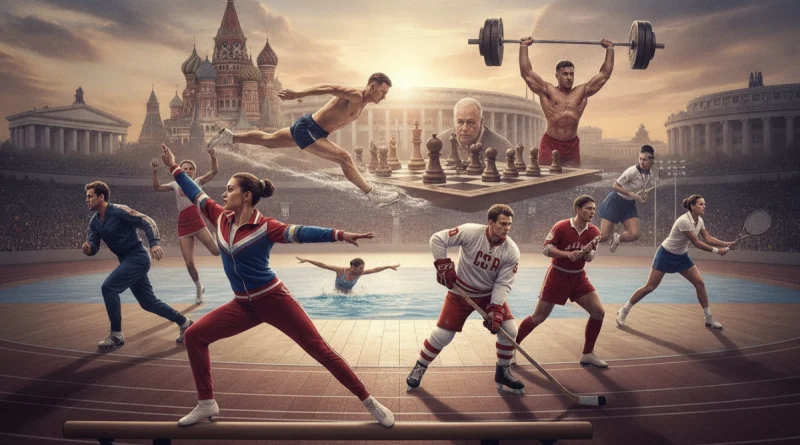
Certain themes surface consistently: a ferocious work ethic forged within Soviet-era academies, an ability to compete under enormous psychological pressure, and a technical precision rooted in generations of deep coaching tradition. In gymnastics, figure skating, and chess especially, Russia’s methodological contributions have shaped entire sports internationally.
Some athletes on this list are remembered primarily for their statistics. Others became symbols — of a nation’s ambition, a generation’s identity, or sport’s capacity to transcend politics. Both types belong here and deserve examination on their own terms.
The Soviet Blueprint: How a Nation Engineered Athletic Excellence
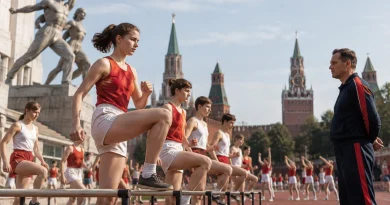
To understand why so many athletes on this list share technical mastery, mental fortitude, and composure under pressure, you have to understand the system that produced them. Beginning in earnest after World War II, the Soviet state invested heavily in identifying young talent and channeling children into specialized sports schools where coaching methodology was treated as a science. Biomechanics, psychology, nutrition, and periodization training were studied with the same institutional seriousness other nations applied to defense.
The results were visible as early as the 1952 Helsinki Olympics, where the Soviet Union made its first Olympic appearance and immediately finished second in the overall medal count. What followed was four decades of sustained dominance that reshaped expectations for what organized sports development could achieve.
What the Soviet blueprint also produced, less visibly, was a culture of sacrifice. Athletes trained with a commitment that bordered on monastic, often spending formative years in residential academies with daily lives structured entirely around competitive preparation. The system had genuine costs, and not every talent emerged intact. But for those who did, the psychological toolkit was formidable. These athletes were extraordinarily difficult to break.
Disciplines That Defined Russian Sporting Identity
Gymnastics and Figure Skating: The Aesthetic Disciplines
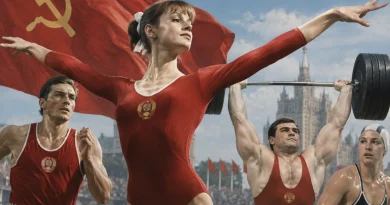
Perhaps nowhere is Russia’s sporting identity more vividly expressed than in gymnastics and figure skating. Both disciplines reward qualities that Russian coaching traditions cultivated with particular intensity: physical precision, artistic expression, and flawless performance under judgment. Soviet gymnasts redefined what the human body could accomplish on apparatus events. Figure skaters trained in Moscow and St. Petersburg set the technical benchmark for pairs skating so definitively that other nations were essentially competing for silver.
What made Russian dominance especially durable was the depth of the talent pool. An athlete who could not make the Soviet national team might have been a world champion elsewhere. That internal competition sharpened every athlete who survived it.
Chess: The Sport That Was Also a War
Any serious accounting of Russian achievement must include chess. The Soviet state funded its development and celebrated its champions with the same apparatus deployed around Olympic gold medalists — because winning at chess was another way of demonstrating the superiority of the Soviet system.
For most of the second half of the twentieth century, the World Chess Championship was, with rare and famous exceptions, essentially a Soviet internal affair. The grandmasters who emerged did not merely win titles — they advanced the theoretical understanding of the game itself, contributing opening innovations and endgame techniques still studied in competition today. Their influence on chess is comparable to what great Soviet gymnastics coaches contributed to their discipline: systemic, generational, and essentially irreversible.
Ice Hockey: Identity Forged at Speed
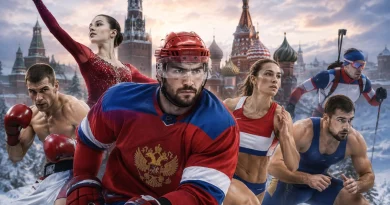
If gymnastics and figure skating reflect the aesthetic dimension of Russian sporting identity, ice hockey reflects its combative one. The Soviet national hockey program, built largely from scratch in the postwar years, developed a style of play — fluid, passing-first, tactically sophisticated — that directly challenged and ultimately transformed the North American game. When Soviet teams met Canadian and American professionals in the summit series of the 1970s, the encounters felt like they carried the weight of entire ideological systems.
The legacy of Soviet hockey methodology is still visible in how the modern game is played. Generations of coaches and players trained in the Russian tradition have carried those principles into NHL locker rooms and European leagues, influencing tactical approaches far beyond Russian borders.
Athletics and Tennis: Russia’s Modern Global Signatures
Beyond disciplines with deep Soviet roots, Russia’s post-1991 generation announced itself through sports requiring a different kind of infrastructure — one built on individual ambition as much as state support. Track and field continued to yield world-class performers in throws and jumps, where Russian technical coaching translated seamlessly into the post-Soviet era. But it was tennis that provided the most visible global platform.
The emergence of Russian players in Grand Slam finals and at the top of world rankings from the early 2000s onward reflected a generation with access to both rigorous mental conditioning inherited from Soviet-era sports culture and international circuits that allowed them to develop against the world’s best from a young age. The names crossed into mainstream cultural recognition in a way only genuine superstars manage.
The Profiles Behind the Rankings: What Each Name Carries
When this list moves through its individual profiles — gymnasts who rewrote scoring expectations, hockey players who changed how the game is conceptualized, chess grandmasters who treated the board as art — each entry carries more than a biography. It carries a specific moment in the longer story of how Russia defined and expressed itself through sporting competition.
Some of those moments are uncomplicated triumphs: a gold medal won cleanly, a world record set beyond dispute. Others are more layered — achievements that exist alongside controversy and the complicated realities of competing under a system that demanded results without always accounting for costs. A serious ranking acknowledges both dimensions without flattening either.
That complexity is part of what makes this subject worth the attention. Russian sport at its best has produced performances of genuine transcendence — moments where the political scaffolding fell away and what remained was simply a human being doing something extraordinary. Those moments are the reason these names endure.
Greatness Does Not Expire: The Enduring Measure of Russian Sport
The athletes gathered in this ranking share one quality that no era, political system, or geopolitical disruption has diminished: the performances themselves remain. Film of Valeri Borzov in full sprint, footage of Soviet pairs skaters moving in perfect unison, tape of Anatoly Karpov navigating an endgame with surgical precision — these are not historical curiosities. They are benchmarks against which subsequent generations continue to measure themselves.
What makes the Russian contribution so remarkable in retrospect is its breadth. This is not a tradition that produced one exceptional generation in one discipline and then faded. It has been sustained, adapted, and reinvented across more than seven decades of international competition. The Soviet machine gave way to something more fractured and complicated, but the talent and methodology persisted — finding new expression on ATP and WTA tours, in NHL arenas, at European athletics championships, and on Olympic stages even when the flag and anthem became points of negotiation.
For those who follow sport seriously, the story of Russian athletic achievement is essential reading — not because it is uncritical or comfortable, but because it is genuinely instructive. It illuminates what dedicated, systematic investment in human potential can produce, and raises honest questions about the conditions under which that potential is developed and deployed.
For further historical context on how the Soviet sports model shaped global athletic development, the International Olympic Committee’s historical archive offers a useful foundation for understanding how state-sponsored programs intersected with the broader Olympic movement across the twentieth century.
The final measure of any athlete — Russian, Soviet, or otherwise — is whether the work they did in competition outlives the moment it was produced. By that standard, the names assembled in this ranking are not merely the best Russia has offered the world of sport. They are among the most consequential figures in the history of human athletic achievement, full stop. That is the reckoning this conversation demands, and it is the one this ranking attempts, with as much care and honesty as the subject deserves.