Russian Tennis: From Soviet Restriction to Grand Slam Dominance and Neutral Status
A Sport Born Under Political Constraint
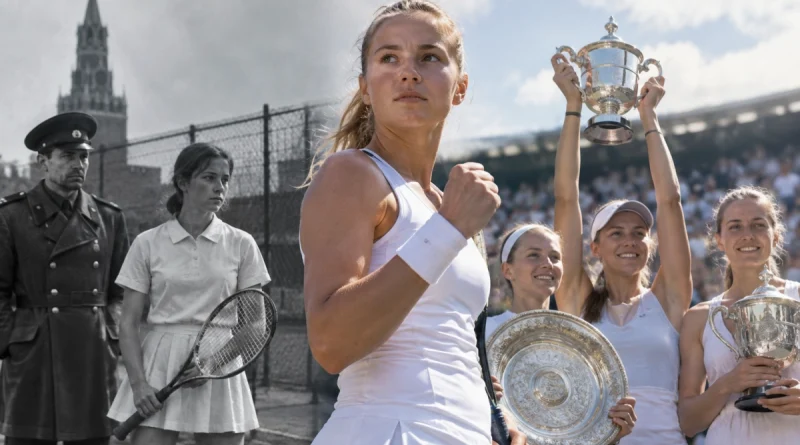
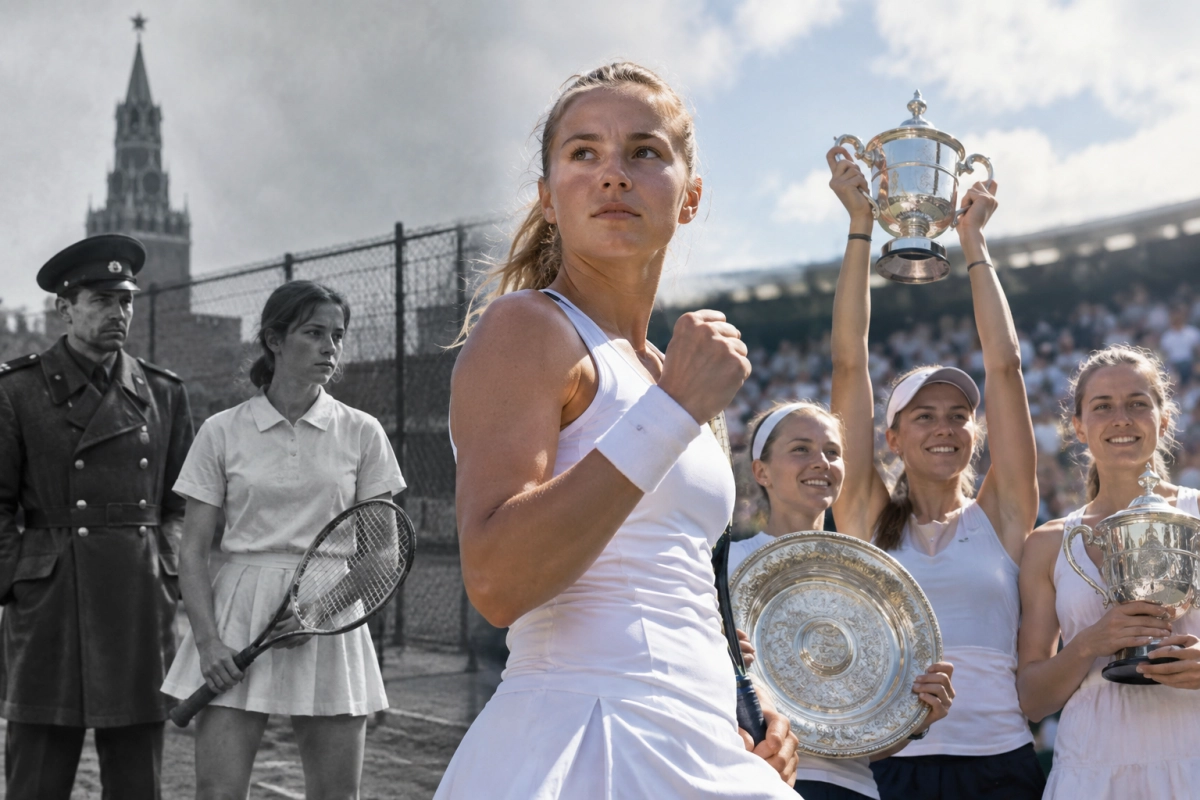
Long before Russian tennis produced Grand Slam champions and household names, it existed as a curious anomaly inside a sporting system built almost entirely around collectivism and state ideology. Tennis, with its individualism, its country-club aesthetic, and its Western associations, sat awkwardly within the Soviet Union’s broader athletic priorities. While gymnastics, athletics, and ice hockey received lavish state investment as showcases of socialist strength, tennis was treated with suspicion — a pastime linked to bourgeois leisure rather than collective achievement.
That did not mean the sport disappeared. A small number of dedicated clubs and coaches kept it alive, often training athletes with limited access to international competition, foreign equipment, or Western coaching methods. Soviet authorities permitted select players to compete abroad, but travel was tightly controlled, and success on the international stage brought as much political scrutiny as personal pride. The infrastructure reflected this marginal status: by the end of the 1980s, the country had fewer than 200 tennis courts in total, a striking contrast to the sprawling networks found in Western Europe or the United States.
Isolation as an Unlikely Foundation
Paradoxically, this isolation created a peculiar kind of discipline. Soviet tennis coaches, deprived of Western resources, developed technically rigorous training philosophies that emphasized footwork, tactical patience, and mental resilience — traits that would later surface unmistakably in the playing styles of Russia’s first generation of global stars. The seeds of a distinct competitive identity were planted here, even if the harvest would not come until the political landscape shifted entirely.
The Collapse of the USSR and an Unexpected Boom
The dissolution of the Soviet Union in 1991 did more than redraw borders — it dismantled the centralized sports apparatus that had defined Russian athletics for decades. Funding streams dried up, state-run academies lost their guaranteed support, and many coaches sought opportunities abroad. Yet from this disruption emerged an unlikely explosion of talent. Freed from rigid state control, private academies and independent coaching networks began to flourish, often built on the technical foundations laid during the Soviet years.
Court infrastructure expanded dramatically in the years that followed, growing from under 200 facilities in 1990 to roughly 2,500 by 2004, a sign of how quickly grassroots interest and private investment reshaped the sport once state monopoly ended. This physical expansion coincided with a golden generation of ruski teniseri who would soon dominate world rankings and major tournaments, proving that the discipline instilled during isolation could translate into international supremacy once opportunity finally arrived.
What followed was a period unlike anything Russian tennis had experienced before — one defined by Grand Slam finals, world number-one rankings, and a new generation of players determined to prove that talent nurtured under restriction could thrive spectacularly once the doors to global competition swung open.
The Golden Generation Takes the World Stage
Yevgeny Kafelnikov’s French Open triumph in 1996 was more than a personal milestone — it was proof of concept. Here was a player shaped almost entirely by the late-Soviet and early-post-Soviet coaching system, defeating the best the West had to offer on its own terms. When he ascended to the world number-one ranking in 1999, he became the first Russian man to do so, shattering any lingering assumption that the country’s tennis ambitions were provincial or secondary to its Western European rivals.
Marat Safin followed with a brand of tennis that combined raw power with theatrical unpredictability, claiming the US Open in 2000 and the Australian Open in 2005. His rivalry with the sport’s established order — and his occasional battles with his own temperament — made him a compelling ambassador for a tennis culture still defining its public identity. Safin’s success mattered beyond the scoreline; it signaled that Russian players could be box-office draws, capable of filling stadiums and generating the kind of narrative tension that broadcasters and sponsors craved.
Sharapova and the Globalization of Russian Tennis
No figure did more to internationalize the sport’s Russian identity than Maria Sharapova. Her 2004 Wimbledon victory, achieved at seventeen, was startling not just for its precocity but for what it represented: a Russian athlete trained partly in the United States, marketed globally, and embraced by a Western audience that had once viewed Soviet athletes with Cold War wariness. Sharapova’s subsequent Grand Slam wins across all four majors cemented a career that blurred national boundaries even as it remained unmistakably tied to her origins.
Her rise also accelerated a broader trend — the migration of promising young Russian players to training bases in Florida, Spain, and elsewhere, where climate, competition density, and sports-science infrastructure offered advantages that domestic academies still struggled to match. This hybrid model, blending Russian technical grounding with Western developmental ecosystems, became the template for the generation that followed.
A New Era of Dominance Under a Different Banner
By the time Daniil Medvedev reached the US Open final in 2019 and won the title in 2021, Russian tennis had entered a new phase entirely — one defined less by the fall of an old system and more by seamless integration into the sport’s global infrastructure. Medvedev’s unorthodox, deep-court style, honed through years on the European and North American tour circuits, reflected a player produced not by isolation but by relentless international exposure.
Alongside him, players like Andrey Rublev and Karen Khachanov extended Russia’s presence deep into tournament draws, sustaining a level of consistency that suggested the golden generation’s success was not a historical accident but the product of durable structures — private academies, competitive junior circuits, and a coaching culture that had matured well beyond its Soviet origins.
Russian Tennis in the Sanctions Era
Russia’s place in world tennis changed sharply after the invasion of Ukraine in 2022. Russian and Belarusian players were permitted to continue competing on the professional tours as individual neutrals, but without national flags, anthems, or official team representation. The arrangement preserved athletes’ careers while separating their participation from state symbolism, reflecting the difficult balance outlined in the ITF’s position on tennis and the war in Ukraine.
For Russian players, the consequences have been both practical and symbolic. They remain visible in Grand Slam draws and on the rankings, yet compete without the national identity that once framed their achievements. Younger prospects have also faced disrupted development pathways, fewer domestic opportunities, and a more complicated relationship with international competition. The result is a new form of separation: Russian tennis remains part of the global game, but its institutional connection to the Russian state is more contested than at any point since the Soviet era.
A Talent Tradition Still in Motion
The history of Russian tennis is therefore not a simple story of state control giving way to freedom. It is a story of adaptation: Soviet discipline surviving political collapse, private investment replacing centralized funding, and internationally trained athletes turning technical inheritance into global success. Kafelnikov and Safin opened the modern era, Sharapova transformed its visibility, and Medvedev demonstrated that Russian tennis could continue producing singular champions in a fully globalized sport.
Its future will depend on whether that talent can be sustained through changing institutions, restricted national representation, and an increasingly international development system. Yet the central pattern remains clear. From a marginal Soviet pastime to a source of Grand Slam champions, Russian tennis has repeatedly evolved under pressure — and its most enduring achievement may be the ability to remain competitive even when the structures around it are changing.