Soviet Training Legacies: Eight Profiles That Shaped Modern Russian Sport
The Soviet sporting machine and its continuing imprint
The Soviet Union produced a disproportionately large number of Olympic champions and world‑class athletes through a tightly integrated system of clubs, institutes and state funding. That system — a network of VSS clubs (Dynamo, CSKA, Spartak), sports schools (DYuSSh), scientific institutes and centralized talent identification — created an ecosystem in which sovjetski sportisti were not only trained but socially supported. For readers who follow Russian football, tennis and hockey, understanding these roots explains both past dominance and current tensions as professionalisation, sanctions and talent drain reshape the landscape.
What made the Soviet method distinct
- Institutional scaffolding: lifelong pipelines from school gyms to elite clubs with guaranteed resources and career pathways.
- Scientific approach: early adoption of sports science, biomechanics, and periodized planning coordinated by state institutes.
- Mass‑participation and specialization: broad talent pools followed by early specialization and high training volumes.
- Collective emphasis: teamwork, centralized camps, and a coaching culture that subordinated individual flair to system tactics.
Early innovators: Lev Yashin and Larisa Latynina — craft, volume and scientific refinement
Lev Yashin and Larisa Latynina personify two complementary strands of Soviet sport: technical mastery honed in club systems, and exhaustive, scientifically guided repetition. Yashin — the goalkeeper mythologised as the “Black Spider” — exemplified methodical positional work, reflex drills and a pioneering reading of the game that effectively professionalised goalkeeping technique in Soviet football. His routines combined stamina conditioning with repetitive, scenario‑based training overseen by Dynamo Moscow’s club infrastructure and the wider Soviet goalkeeper schools.
Larisa Latynina’s dominance in artistic gymnastics emerged from relentless volume training, strict technical drilling, and early specialization within a school system that prioritized all‑around excellence. Her era emphasised consistency across apparatus through progressive overload, choreographed risk management, and psychological preparation that mirrored the state’s drive for reliability at major championships. These methods were supported by centralized coaching staffs and state medical and scientific resources.
Preservation and adaptation after 1991
After the Soviet collapse, both approaches survived but were reshaped. The club‑based supports that sustained Yashin and Latynina contracted; many scientific programs lost funding, and private academies and market incentives emerged. Goalkeeping technique continued in Moscow clubs and academies, but the institutional backup—steady salaries, centralized camps—waned. Gymnastics kept its technical rigor, yet training volumes and pathways fragmented as coaches moved into private schools or emigrated. Contemporary professional pressures, sponsorship models and international coaching exchanges have preserved core drills and periodization, even as state control diminished.
These foundational profiles illustrate the interplay of individual innovation and systemic support that made sovjetski sportisti world leaders. The next section will turn to more visibly theatrical and team‑based innovators — Olga Korbut, Valeriy Borzov and the coaching architects of Soviet hockey and figure skating — and trace in more detail how their techniques were institutionalised or abandoned in post‑Soviet Russia.
Korbut and Borzov — spectacle and sprint science
Olga Korbut and Valeriy Borzov represent two ends of the same Soviet formula: high‑risk technical innovation married to methodical, state‑backed preparation. Korbut rewrote gymnastics by introducing daring acrobatic elements and theatrical presentation; her training blended repetitive drill work on tumbling and release moves with choreographed performance practice overseen by centralized clubs and national coaches. The Soviet system buffered the danger inherent in her innovations with medical teams and biomechanical experimentation, which in turn influenced rule‑making and safety protocols internationally as the sport professionalised.
Borzov’s sprinting success rested less on flamboyance than on micro‑technical refinement — reaction time, block starts, and a scientifically prescribed periodisation that emphasised peak timing for championships. His milieu was the athletics institute model: systematic testing, physiological monitoring and state employment that allowed uninterrupted focus.
After 1991 both trajectories persisted but shifted. Gymnastics became more commercial and internationally networked; many Korbut‑style risk elements were preserved in private schools but constrained by stricter FIG safety codes and greater professional mobility for coaches. Sprint training retained Borzov’s biomechanical focus, yet the loss of stable institutional funding and the lure of foreign expertise fractured continuity. Contemporary pressures — lucrative foreign contracts for coaches and athletes, sanctions limiting participation and exchange, and heightened anti‑doping scrutiny — have further complicated the translation of Soviet granular methods into a marketised sporting world.
Tarasov, Tikhonov and Rodnina — system builders in team and pair sports
Anatoly Tarasov, Viktor Tikhonov and Irina Rodnina occupy the category of architects: coaches or athletes who converted centralized organization into reproducible dominance. Tarasov’s hockey innovations – aggressive forechecking, structured line rotations and near‑military discipline in practice — were institutionalised at CSKA and the national program. Tikhonov amplified a variant of that template into a rigid, camp‑based system with long national‑team stretches and tightly controlled tactical roles; his era produced disciplined Soviet teams but antagonised players drawn to freer, better‑paid Western leagues. Rodnina’s pairs mastery combined technical precision in lifts and throws with choreographic economy developed within specialized skating schools and state studios.
Post‑1991 adaptations diverged. Tarasov’s tactical principles migrated into club play and youth academies, but the loss of centralized labor control meant fewer players spent entire careers in one system; the NHL’s pull hollowed out elite talent, diminishing the domestic talent density Tikhonov had exploited. Rodnina’s technical templates survived in coaching curricula and private rinks, yet show skating and commercial tours offered alternative career paths that diluted the old pipeline. Current dynamics — club professionalisation, coach migration, and travel bans or visa restrictions tied to sanctions — have made it harder for Russian franchises to retain homegrown talent and to exchange tactical knowledge abroad, accelerating both preservation in pockets and abandonment elsewhere.
The coach‑scientist model: Anatoly Bondarchuk and institutional transfer of training knowledge
The Soviet coach‑scientist embodied by Anatoly Bondarchuk (hammer thrower turned theorist) exemplifies the institutional transmission of method. Bondarchuk’s emphasis on specific transfer of training, individualized microcycles and measured maximal efforts came from a culture in which sports institutes, state employment and research labs conferred both authority and resources. Such methods were codified in manuals, dissertations and state courses for coaches.
With the Soviet collapse the material apparatus that sustained coach‑scientists thinned: laboratories lost funding, state employment became precarious and many experts emigrated. Yet Bondarchuk’s pedagogical outputs proved durable — his model was adopted internationally and persists in Russian coaching education. Contemporary constraints — reduced state financing, private clubs that prioritise short‑term results, and restricted scientific cooperation due to political and sporting sanctions — mean the coach‑scientist ideal survives unevenly: influential in specialist circles and exportable through private consultants, but less visible as a unified national program capable of the wide‑ranging talent development once guaranteed by the Soviet scaffolding.
Persistence, adaptation and points of rupture
- Training methods: Specific drills, periodization and biomechanical emphasis have proved portable — taught in private academies, exported by émigré coaches, and incorporated into modern curricula — but routine access to centralized testing labs and guaranteed athlete salaries has largely vanished.
- Tactical/technical innovations: Tactical blueprints (Tarasov’s forechecking, Tikhonov’s role discipline) survive as coaching principles in pockets, while high‑risk technical feats (early Korbut‑style moves) were tempered by new safety rules and commercial incentives toward spectacle over systemized progression.
- Institutional support: The VSS/DYuSSh pipeline and state‑funded science institutes were the hard infrastructure; after 1991 these fragmented into club, private and foreign employment models. Some institutions reconstituted at regional or corporate levels, but national coherence is weaker.
- Contemporary pressures: Professionalisation has created career opportunities but accelerated coach and athlete migration. Sanctions and travel restrictions interrupt scientific collaboration and competition exposure. Talent drain concentrates elite athletes abroad, lowering domestic competitive density and complicating long‑term development.
Between continuity and rupture
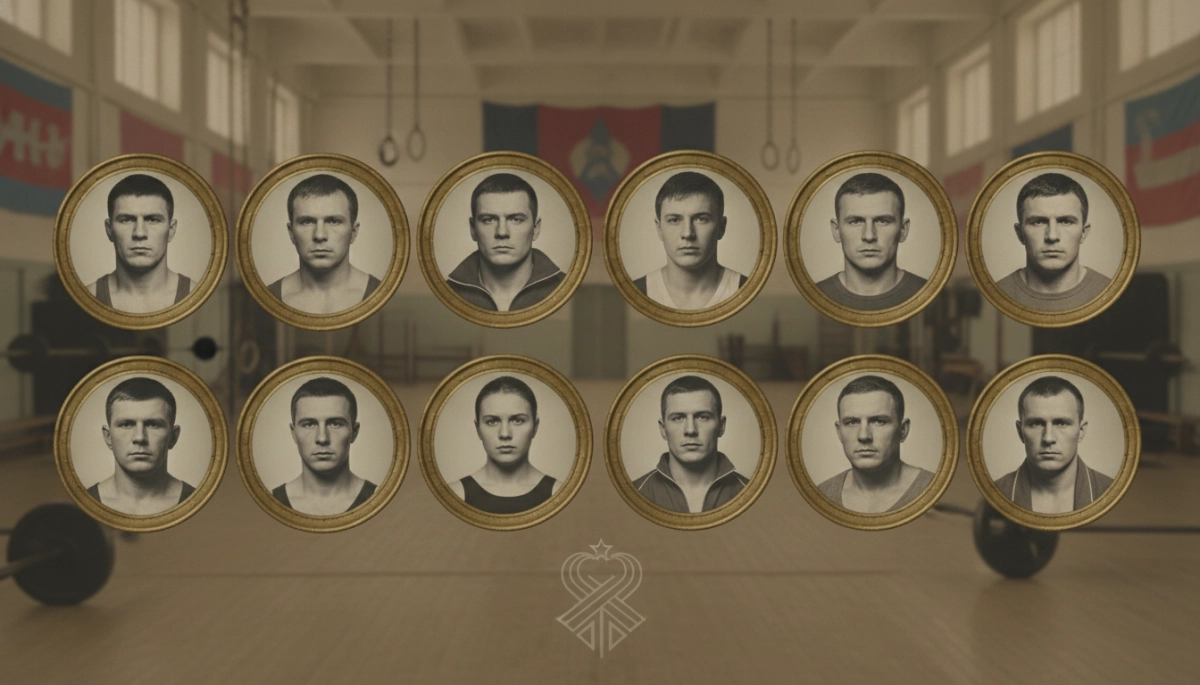
The eight profiles show a clear pattern: technical knowledge and coaching craft are durable and transmissible; the scaffolding that amplified them — stable funding, centralized labour arrangements, state science networks — is fragile and has been remade. What survives tends to do so where coaches, clubs or markets find incentives to conserve depth: elite club programs, private academies with long horizons, and international demand for Soviet‑trained expertise.
Looking ahead, the endurance of these legacies will depend less on nostalgia for a single model than on practical choices. Investing in coach education and regional science partnerships, creating domestic incentives to retain talent, and developing transparent pathways that reconcile professional contracts with developmental continuity would preserve more of the productive elements of the Soviet heritage. Equally crucial is adapting governance and welfare supports to a marketised era so that technical legacies do not ossify into isolated enclaves.
Those seeking a concise historical overview of how Soviet structures shaped sport can consult Sport in the Soviet Union for additional context; pragmatic renewal, however, will require targeted policy, funding, and international engagement rather than nostalgia alone.