Russian Ice Hockey: From Soviet Supremacy to Global Influence
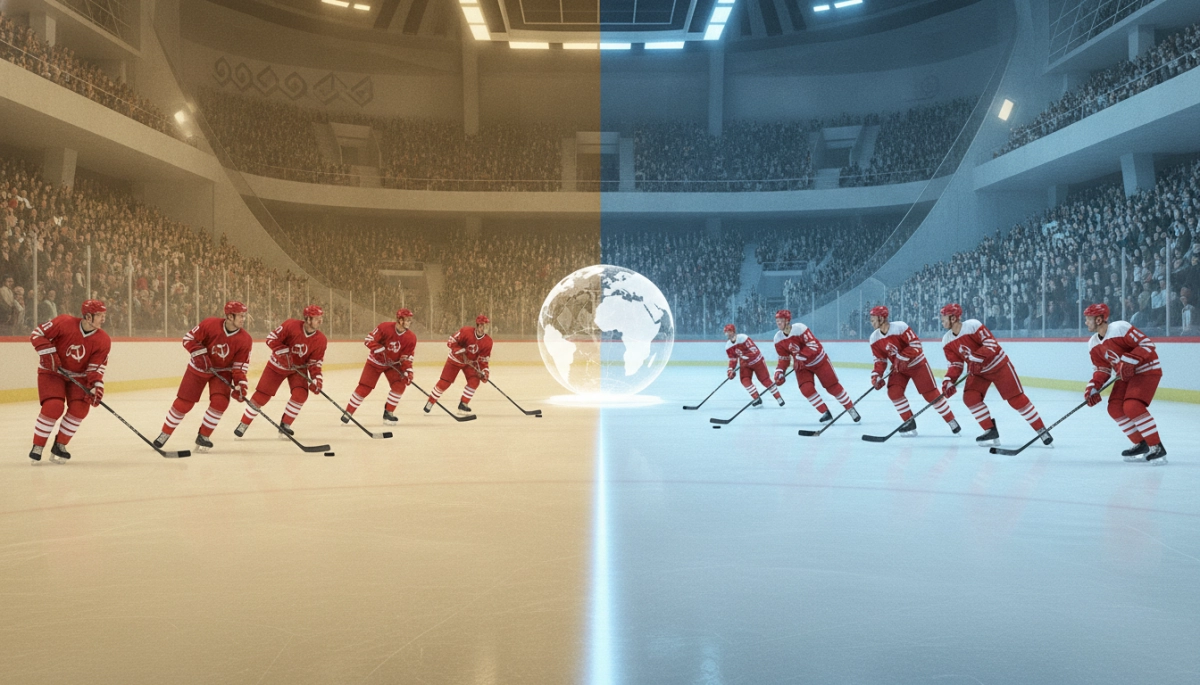
How a Nation Built a Hockey Empire From the Ice Up
Few stories in sports history carry the weight and sweep of Russian ice hockey. What began as a deliberate, state-directed project in the mid-twentieth century evolved into one of the most influential athletic traditions the world has ever seen. To understand how Russian hockey became a global force, it helps to start not on the ice, but in the ideology that surrounded it.
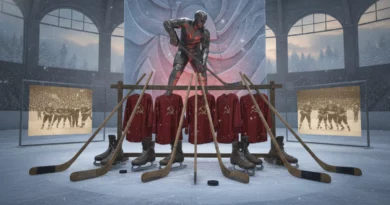
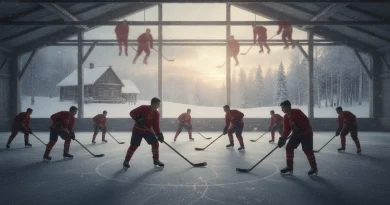
When the Soviet Union entered international competition in 1954, it did so with the quiet confidence of a program that had been engineered, not merely assembled. Soviet coaches had studied the game intensely, adapted techniques from bandy — a stick-and-ball sport popular across Russia — and fused them with a collective philosophy that prioritized fluid passing, spatial intelligence, and conditioning over individual brilliance. The result was a style Western hockey had never encountered before.
Central to this transformation was Anatoly Tarasov, often called the father of Soviet hockey. His methods were meticulous and sometimes brutal, but they produced extraordinary results. From the mid-1950s through the late 1980s, Soviet teams won almost every major international tournament they entered — a streak of dominance that remains unmatched in the sport’s history.
CSKA Moscow and the Machine Behind the National Team
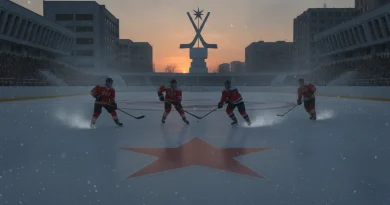
At the center of Soviet hockey stood CSKA Moscow — the Central Army Sports Club — which functioned as both the country’s premier club and an unofficial development pipeline for the national squad. Players like Vladislav Tretiak, Valeri Kharlamov, and Boris Mikhailov were not simply club athletes; they were national symbols.
CSKA operated under Red Army sponsorship, granting it access to resources and training time no rival could match. Players were effectively full-time professionals in a system that officially rejected professionalism. This structural advantage, combined with Tarasov’s philosophy, made the club virtually untouchable during its peak decades.
The 1972 Summit Series — eight games between the Soviet national team and Canadian professional all-stars — offered the hockey world its starkest look at what Soviet preparation had produced. Canada narrowly won, but the Soviets proved emphatically that their system could outplay the best professionals in North America. It was no longer possible to dismiss Soviet methodology as a curiosity. What Tarasov and CSKA had built was a legitimate rival model — one that would reshape the sport far beyond Soviet borders.
The Exodus That Changed Two Continents of Hockey
When the Soviet Union began dissolving in the late 1980s, its hockey program felt the consequences immediately. For the first time, players separated from North American professional leagues by a political wall could contemplate a different future. What followed was one of the most significant talent migrations in professional sports history.
Sergei Priakin became the first Soviet player officially permitted to join an NHL team in 1989. Within months, a trickle became a torrent. Clubs that had quietly drafted Soviet players in late rounds suddenly held legitimate assets. Sergei Fedorov, Pavel Bure, and Alexander Mogilny arrived carrying not just remarkable individual skill but the entire intellectual architecture of the Soviet system encoded in their instincts.
The effect on the NHL was immediate and lasting. Soviet-trained players brought passing fluency, off-puck movement awareness, and defensive structure at full skating speed that reshaped how coaches and scouts thought about the game. Teams that integrated these players well found themselves playing a faster, more intricate brand of hockey.
The Human Cost Behind the Statistics
The migration was not without personal costs. Mogilny defected outright in 1989 during a tournament in Stockholm, severing ties with his country entirely and living under real uncertainty about consequences for himself and his family. Others negotiated departures through opaque channels, with Soviet officials extracting compensation that players had little power to contest.
CSKA, stripped of top talent and state financing simultaneously, effectively collapsed as a competitive force during the 1990s. The Red Army sponsorship that had insulated the club from economic reality vanished alongside the political system that created it. The infrastructure Tarasov had built with such deliberate care proved fragile once removed from its ideological and financial foundations.
The KHL’s Rise and the Search for a New Identity
Russia’s response to the post-Soviet hockey vacuum crystallized in 2008 with the creation of the Kontinental Hockey League. The KHL was an ambitious project — not merely a domestic league rebranded, but a genuinely multinational competition extending across Eastern Europe and Central Asia, drawing clubs from Belarus, Latvia, Kazakhstan, Finland, and China at various points.
The league’s architects understood that competing with the NHL for top Russian talent required more than patriotic appeals. They offered contracts substantial enough to give established NHL players a credible financial reason to return home. At its strongest, the KHL produced hockey of genuine quality, with arenas in Moscow and St. Petersburg drawing crowds that rivaled anything in North America for atmosphere.
Yet the KHL has always carried an ambiguity at its core. Its heavy reliance on state-connected financing, its relationship with Gazprom through clubs like SKA St. Petersburg, and its occasional use as a geopolitical instrument complicated its standing internationally. The league became simultaneously a product of genuine sporting ambition and a tool of soft-power projection — a tension that would eventually become impossible to ignore.
Geopolitics on Ice: Russian Hockey Faces Its Most Complex Era
The invasion of Ukraine in February 2022 introduced a rupture that no league calendar could paper over. Within weeks, the International Ice Hockey Federation suspended Russia and Belarus from all international competitions indefinitely, removing the Russian national team from the 2022 World Championship and placing the country’s hockey identity in institutional limbo it had never previously experienced.
The consequences cascaded quickly. European players departed KHL clubs, contracts were voided, and the league’s multinational identity fractured along political lines. Finnish and Latvian clubs withdrew entirely — a symbolic and structural blow to the league’s broader ambitions. For Russian players established in the NHL, the situation created personal pressure. Players who had spent years avoiding political commentary found themselves fielding questions about their government’s actions in press conferences designed for discussions of power plays and penalty minutes.
Younger Russian players entering the NHL draft pipeline faced a subtler version of the same problem. Scouts and general managers began factoring geopolitical risk into their evaluations in ways that would have seemed extraordinary a decade earlier. The International Ice Hockey Federation has given no firm timeline for reinstatement, and the conditions that would make it politically viable remain unresolved.
What Endures When Empires Recede
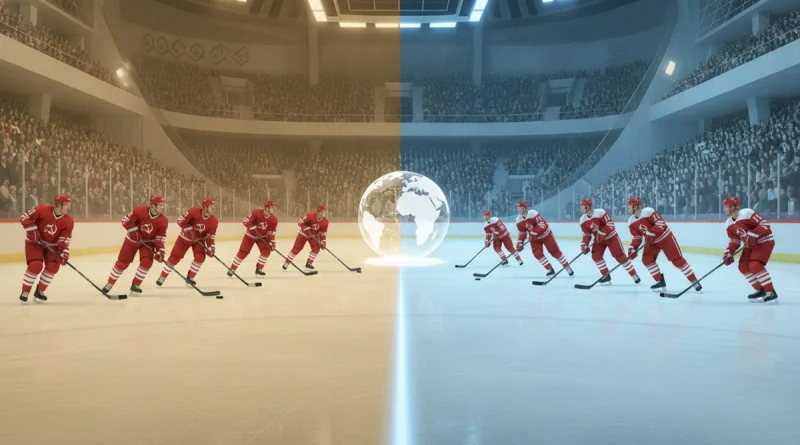
History suggests that the most durable legacies of Russian hockey are not institutional but intellectual — embedded not in leagues or federations, but in the way the game is now understood and played everywhere. The Soviet system produced a body of hockey knowledge so coherent and transferable that it survived the collapse of the political structure that created it, dispersed across the world in the minds and muscle memory of players and coaches who carried it with them.
That legacy is visible in the analytics frameworks now used to evaluate puck movement and defensive positioning. It is visible in European coaching philosophies consciously built on Soviet foundations. It is visible every time an NHL team designs a breakout around spatial principles that Tarasov articulated decades ago in training facilities that no longer exist.
Russia’s hockey story is still being written, even in a moment defined more by exclusion than triumph. The talent remains. The culture remains. What has become uncertain is the institutional framework through which that talent will express itself on the international stage in the years ahead. What is not uncertain is the scale of what Soviet and Russian hockey contributed to the sport. From Tarasov’s practice drills to Tretiak’s positioning to Fedorov’s skating economy, the fingerprints of that tradition are pressed into the modern game so deeply they can no longer be separated from it. That is the particular kind of victory that outlasts politics, sanctions, and the rise and fall of empires — the one written into how a sport is played, long after the circumstances that produced it have passed.