The Evolution of Russian Tennis: From Soviet Suppression to Global Dominance
A Sport the Soviet State Never Wanted
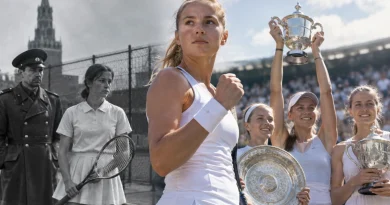
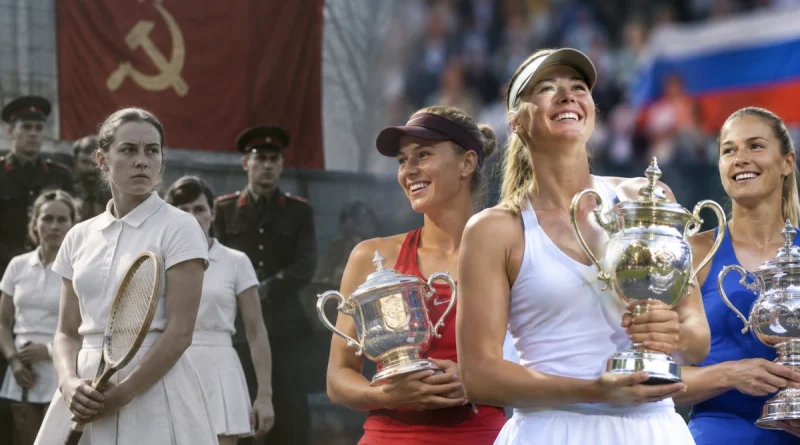
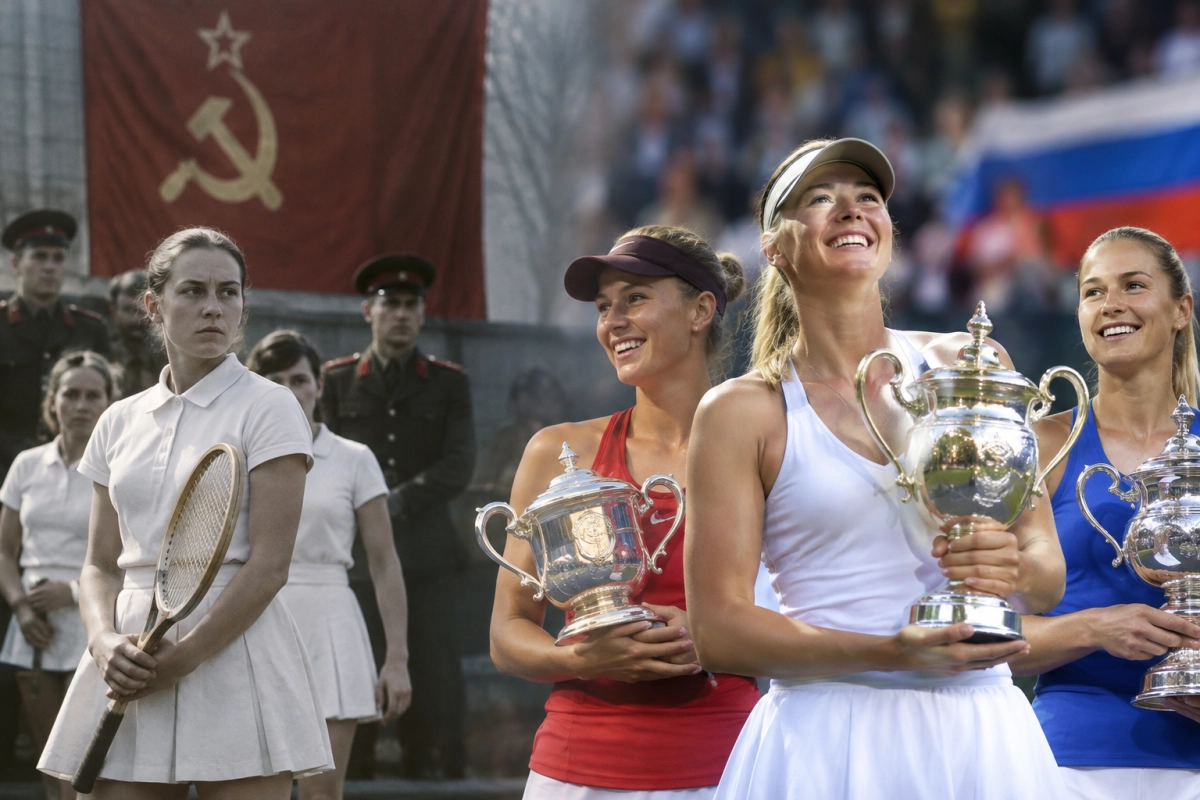
For much of the twentieth century, tennis occupied an awkward, almost suspicious place in Russian sporting life. Under Bolshevik ideology, the game carried an unmistakable whiff of bourgeois leisure — white flannels, private clubs, and an aristocratic pedigree that sat uneasily with a state built on collective labor and mass athleticism. By the mid-1920s, most courts across the Soviet Union had been shuttered or repurposed, and tennis slipped into near-irrelevance while sports like gymnastics, wrestling, and track and field absorbed state resources and ideological favor.
The exclusion went further than domestic neglect. Tennis vanished entirely from the Olympic program between 1924 and 1988, a six-decade gap that left the sport without the one global stage capable of justifying serious Soviet investment. Without Olympic medals to chase, there was little incentive for state sports committees to build academies, train coaches, or scout junior talent in any systematic way. What tennis culture survived did so quietly, often tied to elite institutions in Moscow rather than any broad national infrastructure — a far cry from the mass participation models the USSR championed in other disciplines.
The Narrow Pipeline That Produced Giants Anyway
Despite this institutional cold shoulder, a thin but resilient tennis culture persisted, concentrated almost entirely around a handful of elite clubs. Chief among them was the Spartak Tennis Club in Moscow, which became an unlikely incubator for talent that would later redefine Russian tennis on the international stage. Coaches there worked with limited resources but an unusual depth of technical knowledge, passing down training philosophies that would eventually shape champions far beyond Soviet borders.
What makes the story of ruski teniseri particularly striking is how often the path to greatness led away from Russia itself. Maria Sharapova relocated to Florida as a child to train at an American academy. Marat Safin spent his formative years developing in Spain. This pattern — talent identified at home, refined abroad — became a defining feature of the post-Soviet tennis boom, reflecting both the limitations of domestic infrastructure and the ambition of a generation unwilling to let geography cap their potential.
The payoff arrived with startling speed once the pipeline matured. Yevgeny Kafelnikov’s rise in the mid-1990s, capped by his breakthrough major title in 1996, signaled that Russian players could compete — and win — at the very top of the sport. Safin followed with his own Grand Slam triumphs, bringing a mix of power and flair that made him one of the most compelling figures in men’s tennis during the early 2000s. Within a decade, Russia had gone from a country without meaningful tennis infrastructure to one producing multiple Grand Slam champions across both the men’s and women’s game.
That foundation set the stage for an even more remarkable second wave, one that would eventually include Daniil Medvedev’s ascent to the world No. 1 ranking and a new generation of players competing under circumstances no one could have anticipated a generation earlier.
Sharapova’s Crossover Moment and the Making of a Global Brand
If Kafelnikov and Safin proved that Russian players belonged at the top of the game, Sharapova proved something different: that a Russian athlete could become one of the most recognizable faces in global sport, full stop. Her Wimbledon breakthrough as a teenager in 2004 was more than a tennis result — it was a crossover event, the kind that pulled casual viewers toward a sport many had only half-followed. Sponsors noticed immediately. So did a rising cohort of young Russian girls who, for the first time, had a domestic icon whose path to the top felt tangible rather than theoretical.
That visibility mattered in ways that went beyond individual achievement. Sharapova’s success coincided with a broader surge in Russian women’s tennis, a period sometimes referred to informally as a golden generation, when players like Dinara Safina, Svetlana Kuznetsova, and Anastasia Myskina all reached major finals or claimed titles within a few years of one another. For a brief stretch in the mid-2000s, Russian women didn’t just compete at the top of the rankings — they dominated them, occupying multiple spots inside the top ten simultaneously. It was the clearest evidence yet that the earlier generation’s willingness to train abroad, absorb international coaching methods, and compete relentlessly on the junior circuit had created something closer to a system than a series of isolated success stories.
Medvedev, Rublev, and the Quiet Professionalization of Russian Tennis
By the time Daniil Medvedev emerged as a genuine threat to the sport’s established order in the late 2010s, the conversation around Russian tennis had shifted again. His game — angular, counterpunching, almost contrarian in how it dismantled opponents’ rhythm — reflected a tactical sophistication that suggested deeper coaching infrastructure rather than raw individual talent alone. Andrey Rublev’s emergence alongside him, along with a steady stream of other competitive Russian pros cracking the ATP and WTA top 50, pointed to something more durable: a pipeline that no longer depended on a single transcendent star to justify its existence.
This generation also trained differently than its predecessors. Where Sharapova and Safin had been shaped almost entirely by foreign academies, players coming through a decade later often split time between Russian coaches, European training bases, and an increasingly connected international junior circuit that made geography less decisive than it had been in the 1990s. Tennis federations, private academies, and individual families had all absorbed the lessons of the earlier boom, building more structured development pathways even without the kind of top-down state investment the Soviet era had withheld decades earlier.
Rybakina and the Question of Whose Champion She Is
Elena Rybakina’s Wimbledon title in 2022 complicated the narrative in a way few saw coming. Born and trained largely within the same Russian-speaking tennis ecosystem that had produced the sport’s previous champions, she competed under the Kazakhstani flag — a switch made years earlier for reasons tied to funding and support rather than politics. Her victory forced a reckoning with a question the sport had mostly avoided: how much does a champion’s success belong to the federation funding them, the country issuing their passport, or the coaching lineage that shaped them from childhood? Rybakina’s story suggested the answer was far messier than any single flag could capture.
Playing Under a Neutral Flag: Sanctions and the New Shape of Identity
The invasion of Ukraine in 2022 introduced a complication no amount of tactical sophistication or coaching infrastructure could solve. Russian and Belarusian players were barred from competing under their national flags across most of the tour, and briefly excluded from Wimbledon altogether. Medvedev, Rublev, and a wide tier of ranked professionals found themselves competing as “neutral athletes,” their nationality reduced to a technicality scrubbed from scoreboards and broadcast graphics even as their passports, training bases, and support staff remained unchanged.
For a sport that had spent three decades building visible, flag-forward narratives around its Russian stars, this was a strange inversion. The players still won matches, still climbed rankings, still filled interview rooms — but the national story that had once been central to how fans understood their rise was suddenly absent from view. Tennis, unlike team sports organized around national federations competing against one another, could absorb this shift more easily than most; the sport has always been fundamentally individual, decided by a single name on a scoreboard rather than a flag on a jersey. That structural flexibility let careers continue largely uninterrupted even as the symbolic framing around them changed completely.
What the neutral-flag era ultimately revealed was how much of a champion’s identity had already become untethered from geography. Rybakina’s path had previewed the question years before sanctions made it unavoidable; Medvedev and his peers simply made it impossible to ignore. Tennis fans, for their part, largely kept watching, suggesting that what draws an audience to the sport — the rallies, the rivalries, the sheer difficulty of what’s being attempted on court — doesn’t actually depend on national branding as heavily as the marketing machinery around it once assumed. Organizations like the International Tennis Federation have had to navigate this tension in real time, balancing political pressure against a sport that was never built to police identity so literally.
A Legacy Bigger Than Any Single Flag
Trace the line from Spartak’s threadbare courts to Rybakina lifting a Wimbledon trophy under Kazakhstani colors, and what emerges isn’t a tidy national success story so much as a portrait of talent outrunning the systems meant to contain it. Soviet ideology tried to suppress the sport; infrastructure gaps forced its best prospects abroad; sanctions later stripped away the flag altogether. None of it stopped the tennis itself. If anything, each obstacle pushed the ecosystem to become more adaptive, more internationally woven, less dependent on any single institution’s approval. That resilience, more than any individual trophy, is the real inheritance passed down from Kafelnikov’s generation to the players competing — under whatever banner circumstance allows — today.