Russian Tennis Players: From Soviet Courts to Global Dominance
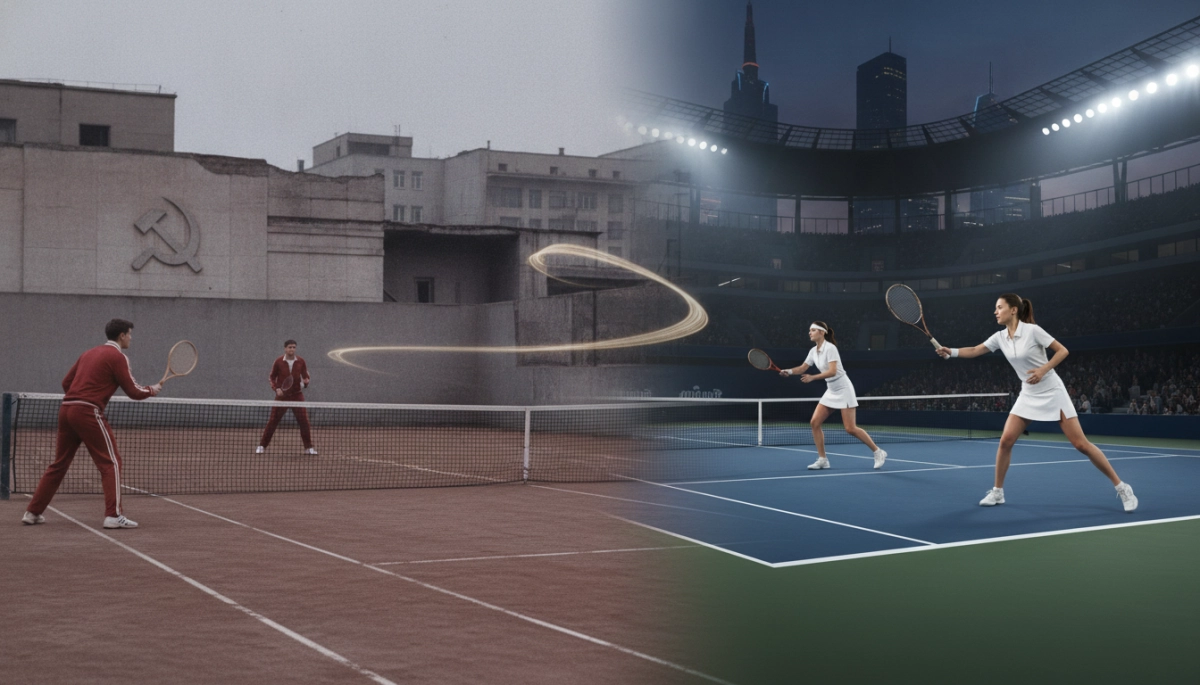
How a Soviet Sporting Culture Quietly Built a Tennis Empire
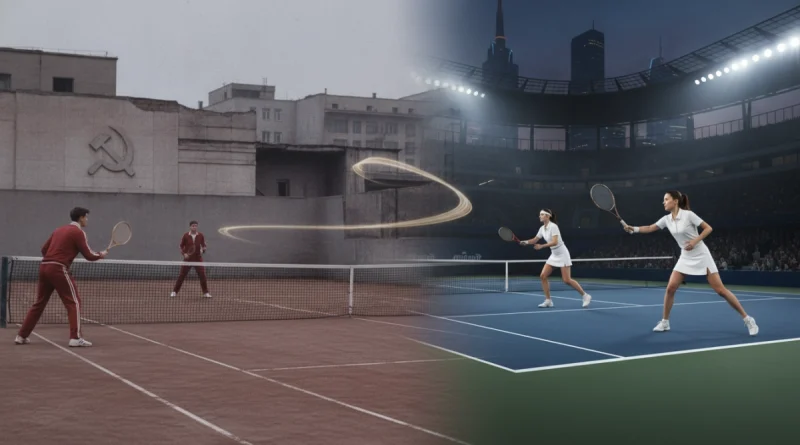
Tennis was never supposed to be a Soviet sport. For much of the twentieth century, Soviet athletic policy poured resources into disciplines that translated directly into Olympic glory — gymnastics, weightlifting, athletics, wrestling. Tennis, with its bourgeois associations and Western tournament circuits, occupied a marginal position. And yet, the infrastructure the Soviet Union built — networks of sports schools, technical discipline, grueling early specialization — quietly laid foundations that would eventually produce one of the most dominant forces in the history of the game.
The transition did not happen overnight. When the political and economic walls came down in the early 1990s, a generation of players trained under the old Soviet system suddenly had access to international competition, professional coaching from abroad, and the full weight of the ATP and WTA circuits. The result, over the following decade, was an explosion of talent that would reshape the sport at the highest level.
The Golden Generation That Changed Professional Tennis
The early 2000s represent the clearest expression of what Russian tennis could become when raw talent met open competition. Marat Safin announced the era with his commanding US Open title in 2000 at just twenty years old. Yevgeny Kafelnikov had already claimed Grand Slam titles in Paris and Melbourne. On the women’s side, the transformation was even more dramatic. Anastasia Myskina, Svetlana Kuznetsova, Maria Sharapova, and Vera Zvonareva collectively dominated the WTA rankings and collected Grand Slam titles across every surface.
Russia wasn’t merely producing individual champions — it was producing a critical mass of elite players simultaneously, which is a far rarer achievement. The country’s Fed Cup victories during this period reflected depth, coaching quality, and a competitive culture that had evolved rapidly from Soviet-era blueprints into something entirely modern.
- Marat Safin — two Grand Slam singles titles, former world No. 1
- Yevgeny Kafelnikov — Roland Garros and Australian Open champion, Olympic gold medalist
- Maria Sharapova — five Grand Slam titles across all four Major venues
- Svetlana Kuznetsova — US Open and Roland Garros champion
- Anastasia Myskina — first Russian woman to win Roland Garros
What made this generation compelling was the variety of playing styles. Sharapova won through relentless baseline aggression and ferocious serving. Kuznetsova combined physicality with touch. Safin could dismantle opponents with brilliance one week and self-destruct the next. There was no single Russian template — just an environment that consistently produced players capable of competing at the very top.
The Machinery Behind the Talent: Academies, Coaches, and the Soviet Blueprint Reimagined
Success at the scale Russia achieved during the 2000s is never accidental. The deeper explanation lies in a coaching infrastructure that absorbed the best elements of Soviet sports science and adapted them aggressively to professional tennis. Where the Soviet system emphasized collective training, strict technical modeling, and early identification of athletic potential, the post-Soviet Russian model retained that discipline while grafting on something new: the individual ambition that professional prize money and global recognition could unlock.
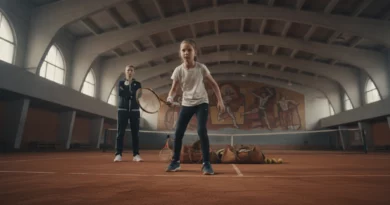
Spartak Tennis Club in Moscow became something of a symbol for this transition. Founded well before the Soviet collapse, it trained generations of players under conditions Western observers often found startlingly austere — outdoor courts used deep into autumn, a relentless emphasis on footwork and consistency before any tactical sophistication was introduced. Players arrived on the international circuit with technical foundations already hardened by years of pressure.
What changed after 1991 was access to what came next. Players could now reach IMG academies in Florida, work with international coaches, and compete on junior circuits that fed directly into professional ranking structures. Maria Sharapova’s trajectory — from Siberian origins to Bradenton, Florida, under the Bollettieri academy system — is the most famous example, but far from unique. The pattern of Russian juniors leveraging Soviet-style early training before plugging into Western professional development pipelines became standard practice during this era.
Daniil Medvedev, Andrey Rublev, and the Art of Competing Without a Flag
The current generation carries that legacy while navigating circumstances their predecessors never faced. Following Russia’s invasion of Ukraine in 2022, the ATP, WTA, and ITF banned Russian players from competing under their national flag. They could continue as individuals — designated “neutral athletes” — but the collective identity that had once been a source of pride was formally stripped away. No Russian tricolor courtside. No national anthem. No Davis Cup or Billie Jean King Cup participation as a nation.
Medvedev, who claimed his first Grand Slam title at the 2021 US Open and reached world No. 1, has spoken carefully in press conferences about a situation he did not create and cannot control. Rublev, known for writing “no war please” on a camera lens after the invasion, has similarly occupied an uncomfortable public position — visible enough to attract political scrutiny, yet unwilling to become a political instrument for anyone.
Their playing styles reflect something of the same complexity. Medvedev’s game is built on calculated neutralization — deep returning, relentless consistency, and a defensive instinct that produces offensive outcomes. Rublev’s approach is its opposite: ferocious, front-foot, occasionally combustible, a player who wears his emotional state openly in ways that make him compelling viewing even when results go against him.
The Rankings Tell Part of the Story
Despite the political context, the raw numbers confirm that Russian tennis has not declined in quality. In the years following the sanctions:
- Medvedev has consistently occupied the ATP top five and won multiple Masters-level titles
- Rublev has remained a fixture in the ATP top ten and reached Grand Slam semifinals
- Daria Kasatkina and Veronika Kudermetova have maintained top-thirty WTA rankings and won titles
- Mirra Andreeva, born in 2007, has emerged as perhaps the most exciting young player in the women’s game, suggesting another generational wave is forming
What the rankings cannot capture is the texture of competing as a stateless professional — celebrated by Russian fans who follow results obsessively, yet officially unattached to the nation those fans represent. The players who inhabit this limbo have handled it, for the most part, with a professionalism that the situation itself hardly makes easy.
A Tradition Too Deep to Be Defined by a Flag
What the history of Russian tennis ultimately demonstrates is that sporting cultures, once genuinely established, develop a momentum that outlasts the political conditions that shaped them. The Soviet system did not set out to build a tennis empire. The post-Soviet chaos of the 1990s was hardly an ideal environment for nurturing elite athletes. The geopolitical rupture of 2022 was not something any player could have anticipated. And yet, at every stage, Russian tennis found a way to adapt, produce, and compete.
That resilience is structural. The coaching lineages running from Soviet sports schools through post-Soviet academies to the current generation represent accumulated knowledge that does not disappear because a flag is removed from a courtside chair. The habits of early specialization, technical rigor, and competitive toughness that defined Safin and Sharapova are visible in the way Medvedev constructs a return game, or in the fearlessness with which Mirra Andreeva has already competed against players a decade her senior on the sport’s biggest stages.
The neutral-flag era has, paradoxically, made individual players more visible rather than less. Without the collective Russian brand to shelter behind, each player stands alone in public consciousness — recognized for their game, their personality, their press conference composure under genuinely difficult questioning. Medvedev is not a symbol of Russian tennis in the way Sharapova once was. He is, instead, simply one of the most intelligent competitors the sport has produced in a generation, which is a more durable kind of reputation.
The broader arc — from the margins of Soviet athletic policy to the center of global professional tennis — is a story about what happens when an unlikely infrastructure meets an open world. Russia did not engineer this dominance consciously or all at once. It accumulated it, layer by layer, through thousands of early-morning training sessions on outdoor courts in cities most tennis fans could not locate on a map. The players who emerged from that process changed what professional tennis looked like at its highest level, and those currently competing under a neutral designation show every sign of continuing that tradition — with or without a flag, and with or without the world’s uncomplicated blessing.
For those who want to follow the full arc of these players’ careers and track how their rankings evolve through the current political landscape, the ATP Tour’s official rankings and player profiles offer the most reliable and regularly updated resource available.