Russian and Soviet Ice Hockey: A Legacy Forged in Cold War Ice and Global Ambition
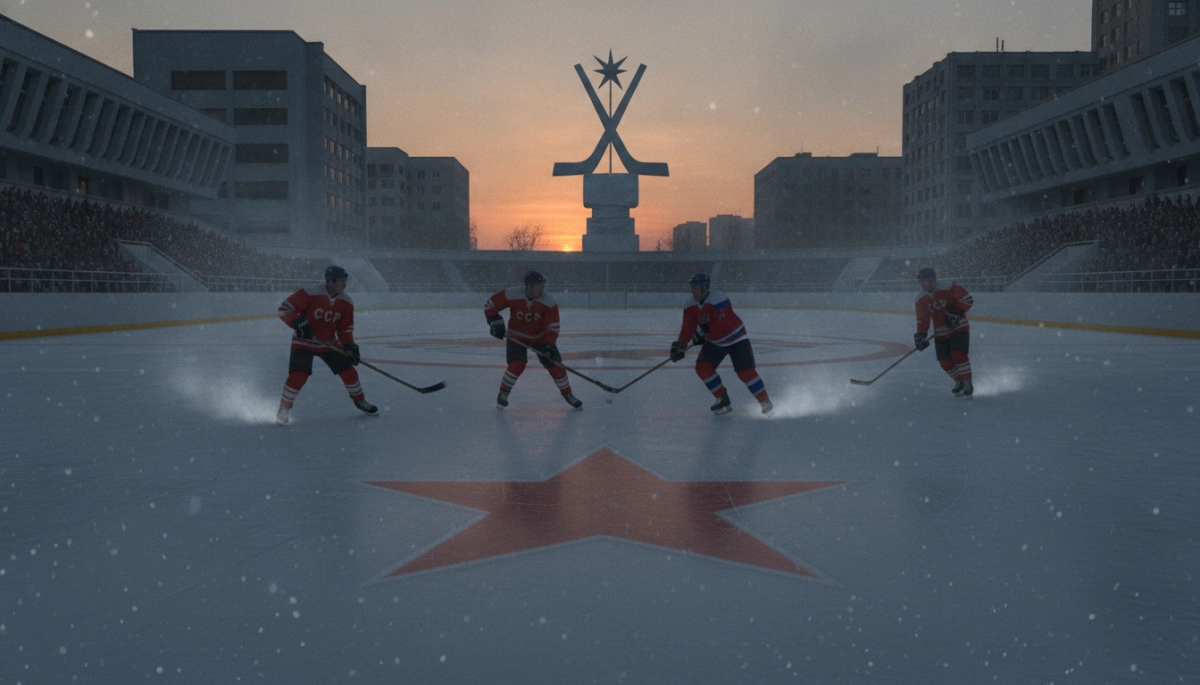
How the Soviet Union Built a Hockey Empire That Rewrote the Sport’s Rules
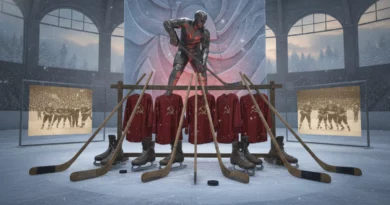
Ice hockey was not born in Russia. The game arrived relatively late, taking root in the Soviet Union only in the late 1940s. What happened next remains one of the most extraordinary stories in the history of team sport. Within a decade of adopting the game, the Soviet Union had not merely caught up with the established hockey nations — it had begun to systematically dismantle them on the international stage.
The Soviet approach was unlike anything the hockey world had seen. Coaches like Anatoly Tarasov did not simply teach players to skate and shoot — they reimagined what hockey could be. Drawing from football tactics, ballet training, and chess theory, Tarasov created a fluid, possession-based system that prized movement, creativity, and collective intelligence over brute physicality. The result looked almost alien to Canadian and American eyes: purposeful, technically immaculate, and relentlessly organized.
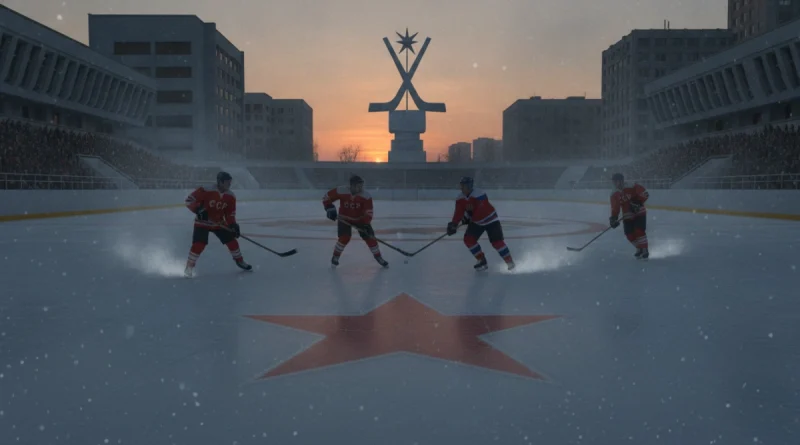
Soviet players trained as full-time state athletes, shielded from North American professional leagues, which created both a profound competitive advantage and an almost mythological mystique. Western audiences rarely saw these players up close, which only deepened the sense that something extraordinary was happening behind the Iron Curtain.
The Summit Series and the Moment That Changed Everything
The tension between Soviet excellence and North American pride reached its most dramatic expression in September 1972. The Summit Series — an eight-game showdown between the Soviet national team and Canada’s NHL professionals — was supposed to be a comfortable showcase of Canadian superiority. It became something far more complicated. The Soviets won the first game convincingly, shocked the hockey world, and forced a national reckoning in Canada that still resonates today.
Canada ultimately won the series in its final seconds, but the margin was razor-thin. Soviet hockey had arrived on the world stage with full authority. Players like Valeri Kharlamov, Alexander Yakushev, and goaltender Vladislav Tretiak became names that serious hockey fans everywhere were obliged to know.
- Vladislav Tretiak — widely regarded as the greatest goaltender in hockey history
- Valeri Kharlamov — a forward of dazzling skill whose career was cut tragically short
- Viacheslav Fetisov — a defenseman who later became one of the NHL’s most decorated players
- Igor Larionov — the cerebral center of the legendary KLM line
These names represent only a fraction of the talent the Soviet system produced. Understanding them — and the institutional machinery that created them — is essential to understanding why Russian influence on professional hockey has been so deep and so lasting.
The Great Migration: When Soviet Stars Crossed to the NHL
As Mikhail Gorbachev’s glasnost policy loosened the grip of the Soviet sports apparatus in the late 1980s, NHL teams began acquiring players they had been drafting speculatively for years. Suddenly, the pipeline opened.
Fetisov and Larionov arrived in North America after protracted battles with Soviet hockey authorities reluctant to relinquish control over their most valuable assets. Their journeys were not simply career decisions — they were acts of personal defiance against a system that had treated athletes as state property. When they finally pulled on NHL jerseys, they brought with them not just elite skill but an entirely different understanding of how the game could be played.
The Detroit Red Wings became the most visible beneficiaries. By the mid-1990s, their Russian Five — Fetisov, Larionov, Sergei Fedorov, Vladimir Konstantinov, and Vyacheslav Kozlov — had transformed the franchise into a dynasty, demonstrating conclusively that Soviet hockey philosophy was not merely theoretical. It won championships. Fedorov, in particular, became a kind of argument made flesh. His skating appeared almost fraudulent in its ease, and his ability to read the ice recalled the chess-infused systems Tarasov had developed decades earlier. He won the Hart Trophy as the league’s most valuable player.
Building on the Blueprint: Russian Players in the Modern NHL
From Mogilny to Ovechkin — A Continuous Thread
The wave that began with Fetisov and Larionov never really stopped. Alexander Mogilny defected dramatically in 1989. Pavel Bure electrified Vancouver with speed that made neutral-zone traps look like architectural defects. Sergei Zubov redefined offensive defense with a calm authority his peers spent careers trying to replicate.
Then came Alexander Ovechkin, who arrived in Washington in 2005 and immediately rendered entire defensive systems obsolete. His shot — a wrist release taken from an angle most players would consider geometrically hopeless — became the single most studied offensive weapon in the sport. By the time he lifted the Stanley Cup in 2018, he had rewritten the record books and validated every argument ever made about the depth of Russian hockey’s developmental tradition.
Evgeni Malkin, his generational peer in Pittsburgh, offered a different but equally compelling case study. Where Ovechkin was a force of nature, Malkin was mercurial — capable of carrying entire playoff runs on individual improvisation while also functioning as a sophisticated playmaker. Together, they represented the breadth of what Russian hockey development could produce: two entirely different players forged by the same cultural and institutional inheritance.
- Alexander Ovechkin — NHL’s all-time leading goal scorer and a transformative figure in the league’s modern era
- Evgeni Malkin — three-time Stanley Cup champion and two-time Art Ross Trophy winner
- Pavel Datsyuk — regarded by many peers as the most technically complete player of his generation
- Ilya Kovalchuk — a scorer of exceptional gifts whose career bridged Russian domestic leagues and the NHL across multiple chapters
Geopolitics Returns to the Ice: Sanctions, Exclusions, and Fractured Careers
Following Russia’s invasion of Ukraine in 2022, international hockey governing bodies moved swiftly to ban Russian and Belarusian national teams from IIHF competitions. For Russian players already established in the NHL, this created an unusual double reality. Within the league itself, they continued to compete without restriction. But the door to international competition, through which so much of Russian hockey identity had historically been expressed, slammed shut.
The impact has been most acutely felt among younger players navigating their careers at a moment of sustained geopolitical fracture. Prospects drafted by NHL teams face a landscape where the traditional pathway — representing Russia at World Junior Championships, building international reputations, gaining high-pressure developmental experience — has been severely disrupted. Some have redirected their attention toward the Kontinental Hockey League, which has grown substantially in quality and ambition since its founding in 2008, partly as a calculated alternative to NHL dominance.
Whether the current geopolitical impasse eventually relaxes or hardens into something permanent will shape not just individual careers, but the entire trajectory of a hockey tradition that has become inseparable from the sport’s global identity.
A Tradition Too Deep to Be Defined by Any Single Era
What the Soviet Union built on ice was never simply a hockey program. It was a demonstration of what happens when a nation decides, with absolute institutional seriousness, that a sport is worth understanding from first principles. The methods were often ruthless, the ideological scaffolding has long since collapsed, and the geopolitical tensions currently surrounding Russian hockey carry consequences that are both real and unresolved. None of that diminishes the depth of what was created.
The through line from Tarasov’s training sessions in the 1950s to Ovechkin’s record-breaking goals in the 2020s reflects a developmental philosophy durable enough to survive the death of the state that created it, the dissolution of its institutional structures, and the relentless commercial pressures of modern professional hockey. Players trained in the Russian tradition carry certain habits of mind onto the ice that remain identifiable decades after the original source was dismantled.
The current period of exclusion is genuinely serious, and its effects on a generation of young Russian players deserve honest acknowledgment. Yet the sport has absorbed political disruption before — the Summit Series itself was played against a backdrop of Cold War hostility so intense that diplomatic niceties barely survived the opening faceoff — and the underlying talent has consistently found ways to make itself known. For anyone seeking a deeper understanding of how international hockey governance continues to navigate these pressures, the International Ice Hockey Federation remains the most authoritative source for evolving eligibility decisions and competition frameworks.
Russian hockey’s global influence was not an accident of geography or a temporary product of Cold War competition. It was earned, methodically and over generations, by a tradition that forced every other hockey nation to rethink its own assumptions. Whatever the next chapter looks like politically, that intellectual and athletic inheritance is not going anywhere. The ice, in the end, keeps its own records.