The Greatest Russian Athletes in History: A Ranked and Contextualized Guide
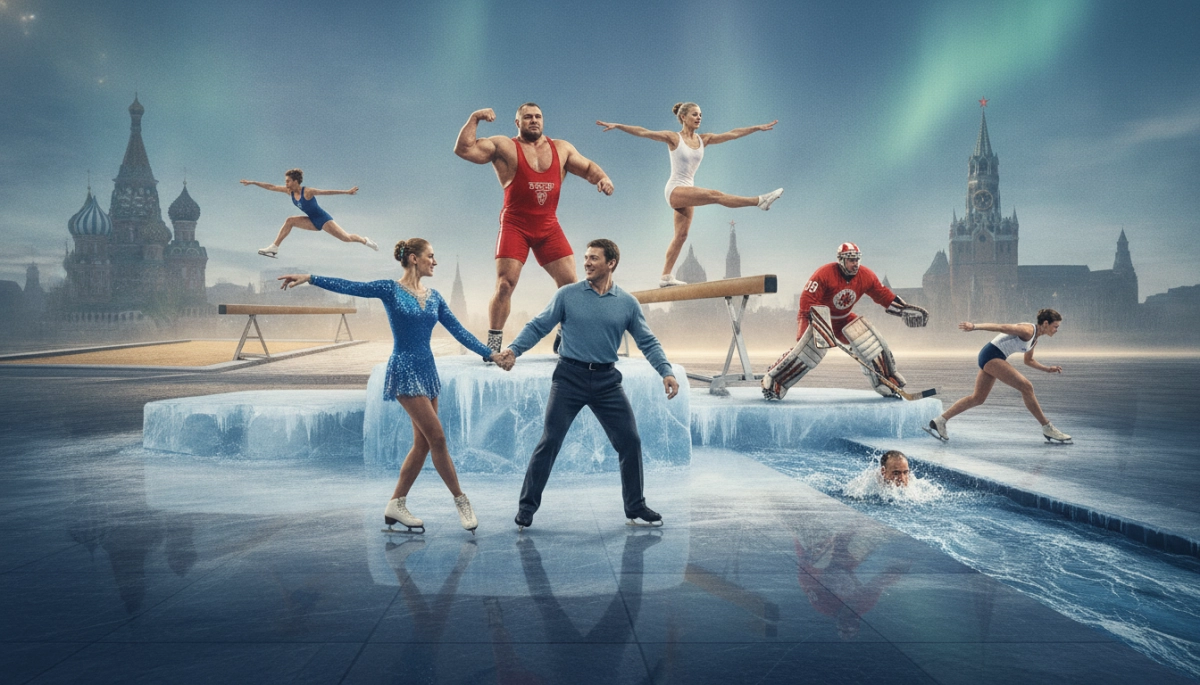
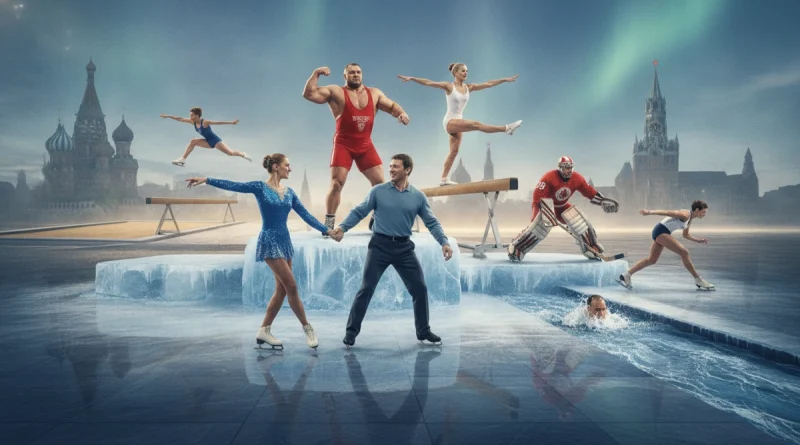
A Sporting Empire: Why Russian and Soviet Athletes Redefined Global Competition
No serious conversation about the greatest athletes in world sport can ignore the vast legacy of Russia and the Soviet Union. From the frozen rinks of Moscow to the gymnastics halls of Minsk, this region has produced a volume and variety of elite athletes that few nations can rival. Understanding who the best Russian athletes in history truly are requires more than a simple medal count. It demands context — historical, political, and deeply human.
The Soviet Union entered the Olympic movement in 1952 and immediately announced itself as a sporting superpower. For nearly four decades, Soviet athletes were trained within a state apparatus designed not merely to develop talent but to weaponize it. Sport was ideology in motion. Victories over Western nations carried meaning far beyond the podium. That pressure produced extraordinary champions, but also a system whose methods and ethics remain debated to this day.
When the Soviet Union dissolved in 1991, that infrastructure fractured overnight. Modern Russia inherited much of that sporting culture, rebuilt portions of it, and has since produced world-class figures in tennis, football, and hockey — disciplines that received limited emphasis in the Soviet model but flourished in the post-Soviet era.
The Framework for Ranking Greatness Across Eras and Disciplines
Ranking the greatest Russian athletes across different disciplines and eras is inherently imperfect. A Soviet gymnast competing in the 1970s operated in an entirely different world from a Russian tennis player navigating the ATP Tour in the 2000s. What remains constant is the weight of achievement against the competition of one’s time.
The criteria used here balance several factors: dominance at peak level, longevity and consistency, the significance of victories on the world stage, and broader cultural impact. The following elements carry particular weight:
- Olympic dominance: multiple gold medals across one or more Games
- World Championship performance: sustained excellence at the highest level of global competition
- Longevity: elite performance sustained across multiple seasons or cycles
- Cultural and historical significance: influence beyond results, including on future generations
- Discipline-specific context: accounting for the depth and global reach of each sport
Gymnastics and Wrestling: The Foundations of Soviet Athletic Identity
If any two disciplines defined the Soviet approach to sport, they were gymnastics and wrestling. Precise, demanding, and deeply coached, they produced athletes whose names deserve to be spoken alongside the greatest competitors in any field.
Larisa Latynina remains perhaps the most statistically dominant Olympic athlete the Soviet Union ever produced. Competing across the 1956, 1960, and 1964 Games, she collected eighteen Olympic medals — nine of them gold — a total that stood as the all-time Olympic record for nearly half a century. Latynina competed in an era when gymnastics required excellence across floor, beam, bars, and vault simultaneously. She delivered it consistently for nearly a decade, and her influence shaped the coaching philosophies that produced subsequent generations of Soviet champions.
The wrestling tradition ran equally deep. Aleksandr Karelin, competing through the 1980s and 1990s in Greco-Roman wrestling, went undefeated in international competition for thirteen years. He won three Olympic gold medals and nine World Championships, and he did not merely win — he won with a physical authority that forced entire national programs to restructure their training simply to develop strategies against him. Those strategies ultimately proved insufficient. His solitary Olympic silver in 2000, the first loss of his senior career, remains one of sport’s most quietly stunning moments.
The Depth Behind the Names
It would be reductive to treat Latynina and Karelin as isolated phenomena. Soviet gymnastics produced Nikolai Andrianov, Boris Shakhlin, and Nellie Kim alongside Latynina. Soviet and Russian wrestling generated dozens of Olympic and World Champions across weight categories spanning generations. The depth of these programs was itself a form of excellence — evidence of a system genuinely manufacturing elite athletes rather than relying on occasional natural outliers.
The Ice as a Stage: Soviet and Russian Hockey’s Global Imprint
Hockey was adopted by the Soviet system with a thoroughness that reshaped the sport permanently. The Soviet national team, developed under legendary coaches Anatoli Tarasov and later Viktor Tikhonov, did not simply compete in international hockey — it reinvented how the game was conceptualized. Their passing-based, positionally fluid style effectively created a parallel school of thought whose echoes are still visible in elite European hockey today.
Vladislav Tretiak stands as the most celebrated individual product of that system. Widely regarded as the greatest goaltender in the history of the sport, he won three Olympic gold medals and ten World Championships. His performance in the 1972 Summit Series — an eight-game showdown between the Soviet Union and Canadian professionals at the peak of their powers — established him as a figure of global stature. Canada entered that series expecting to win comfortably. Tretiak was a primary reason they nearly did not.
Beyond Tretiak, the Soviet and later Russian hockey tradition produced players whose careers unfolded across both sides of the ideological divide. Sergei Makarov, Igor Larionov, and Vyacheslav Fetisov formed the spine of a team that was functionally the best hockey collective in the world through much of the 1980s. When the Soviet Union dissolved and NHL doors opened, the pipeline that followed — Sergei Fedorov, Pavel Bure, and eventually Alexander Ovechkin and Evgeni Malkin — demonstrated that the tradition had survived political collapse entirely intact.
The Question of Ovechkin’s Place in the Hierarchy
Alexander Ovechkin presents a genuine challenge within any ranking of the best Russian athletes in history. His career belongs entirely to the professional era, measured in goals rather than gold medals. Yet the scale of his achievement is difficult to argue with. His prolific scoring across nearly two decades in the world’s most competitive hockey league, culminating in an NHL career goals record, places him in a category occupied by very few athletes in any sport.
Tennis, Athletics, and the Modern Russian Competitor
The post-Soviet era opened disciplines the Soviet system had largely neglected. Tennis was considered an individualistic pursuit poorly suited to the collective model. What followed the Soviet collapse was therefore remarkable: within a single generation, Russia produced arguably the deepest concentration of elite women’s tennis talent the sport has ever seen from one nation.
Maria Sharapova and Marat Safin represent the sharpest peaks of that generation, surrounded by genuine world-class competitors — Svetlana Kuznetsova, Vera Zvonareva, Elena Dementieva — who collectively dominated WTA rankings for much of the 2000s. Sharapova’s five Grand Slam titles place her unambiguously among the great Russian athletes of any era. What adds texture to her legacy is that she achieved it without institutional support, navigating professional sport as an individual enterprise in the full commercial and competitive sense.
In athletics, Yelena Isinbayeva brought a different kind of dominance. The pole vaulter set twenty-eight world records across her career — a number that in any other discipline would seem statistically implausible — and won two Olympic gold medals and three World Championship titles. She elevated the event’s ceiling so consistently and over such an extended period that she functionally redefined what the pole vault could look like for a women’s athlete.
The Measure of a Sporting Legacy That Refuses Simple Definition
What emerges from surveying Russian and Soviet athletic achievement is not a neat podium with clear rankings. It is something more honest: a portrait of recurring greatness operating across radically different contexts, political systems, and sporting cultures.
Larisa Latynina’s eighteen Olympic medals were accumulated inside a state apparatus that made elite sport its institutional priority. Alexander Ovechkin’s record-breaking NHL career was built through individual agency within professional sport’s most demanding environment. Aleksandr Karelin’s thirteen-year unbeaten run unfolded mostly without mainstream visibility. Vladislav Tretiak reshaped how a position in a team sport is understood and coached. Each of these athletes was definitively the best in the world at what they did, for as long as they did it.
The tradition also carries complications that honest assessment cannot sidestep. State-sponsored doping programs, political manipulation of sport, and institutional pressure placed on athletes in ways unacceptable by modern standards — these are part of the record too. Acknowledging them does not diminish the physical achievements of athletes who competed with a ferocity and dedication that would have produced greatness under any system. But it belongs in the picture.
For those interested in exploring the full statistical record of Soviet and Russian Olympic performance, the International Olympic Committee’s official country profile for Russia provides a comprehensive foundation from which to begin.
Ultimately, the best Russian athletes in history are not great because of where they came from or what political system trained them. They are great because, when placed against the best competition their era could produce, they won — repeatedly, decisively, and in ways their sports had not witnessed before. That is the only measure that survives when political systems dissolve and institutional frameworks collapse.
That record, in the case of Russia and the Soviet Union, is formidable by any honest accounting.