
The Soviet Sports Machine: How the USSR Built an Athletic Empire

A System Built to Win: The Architecture of Soviet Athletic Power
When Soviet athletes began dominating international competition in the 1950s, Western observers often attributed their success to ideology — the motivating force of national pride under a communist system. That explanation was never entirely wrong, but it was profoundly incomplete. Behind every gold medal stood something far more deliberate: a state apparatus engineered from the ground up to identify, develop, and deploy athletic talent at industrial scale.
Across roughly four decades — from the post-war era through the twilight of the Soviet Union — the USSR constructed one of the most comprehensive and centrally coordinated sports development programs in human history. Its legacy continues to influence how many nations, including Russia today, approach competitive sport at the highest levels. The medals did not simply happen. They were planned.
Sports Schools and the Early Identification of Talent
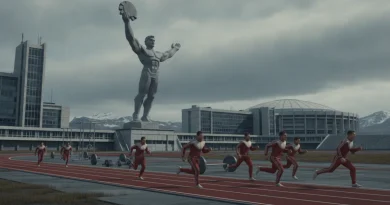
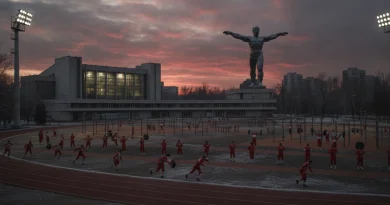
The foundation of Soviet athletic dominance was laid not in stadiums but in a network of state-funded specialized sports schools known as Detsko-Yunosheskie Sportivnye Shkoly, or DYSS. These institutions existed in virtually every major Soviet city and were designed to begin talent identification in childhood, often as early as age six or seven.
Selection was rigorous and systematic. Physical education instructors, coaches, and state-appointed scouts channeled children who demonstrated exceptional physical attributes into the specialized program. Once enrolled, a young athlete received coaching, nutrition guidance, medical monitoring, and structured competition — all at no cost to the family. The state absorbed the investment entirely, treating athletic development as a national priority on par with scientific and military capability.
By the time a Soviet athlete reached their teenage years within this pipeline, they had already accumulated thousands of hours of discipline-specific training. The contrast with Western models of the era — where athletic development was largely informal, parent-driven, and economically dependent — was stark.
- Centralized talent scouting began in primary school years
- Specialized schools operated across every major Soviet republic
- Athletes received state support covering coaching, nutrition, and medical care
- Early specialization in gymnastics, weightlifting, swimming, and athletics was standard practice
The Science of Winning: Research Institutes and Training Methodology
What separated the Soviet system from mere talent harvesting was its deep investment in sports science. The Central Institute of Physical Culture in Moscow served as the intellectual nerve center of Soviet athletic methodology. Researchers worked alongside coaches to develop training periodization models, recovery protocols, and biomechanical analysis techniques that were genuinely decades ahead of mainstream Western practice.
The concept of periodization — the structured cycling of training loads to peak performance at the right moment — was largely systematized and exported to the world from Soviet research institutions. Coaches like Lev Matveyev formalized training theories now considered foundational across virtually every elite sport globally. Soviet sports medicine integrated physiological testing, psychological conditioning, and nutritional science into a unified preparation model rather than treating them as separate concerns.
This scientific infrastructure gave Soviet coaches a shared, evidence-based language for athletic development applicable across disciplines — from wrestling and rowing to track and field and ice hockey. The result was not uniformity but coherence: a system flexible enough to produce world-class gymnasts and world-class sprinters using the same underlying principles.
The Administrative Architecture: Goskomsport and the Chain of Command
If the sports schools were the roots of Soviet dominance and the research institutes its intellectual engine, then the State Committee for Physical Culture and Sport — Goskomsport — was the central nervous system binding everything together. This government body set priorities, allocated resources, approved coaching appointments, and determined which disciplines would receive intensified investment ahead of each Olympic cycle. It operated with the same bureaucratic seriousness as any ministry of state, because in the Soviet conception, sport was not recreation. It was policy.
Goskomsport coordinated directly with national sports federations, each governing a specific discipline with its own coaching networks and competition calendars. These federations were not independent bodies — they answered upward through the administrative hierarchy, their budgets tied to performance outcomes. A federation that delivered medals saw resources flow. One that underperformed faced scrutiny and reorganization.
This accountability structure created powerful incentives for results. When Soviet leadership decided in the early 1970s that women’s rowing required greater investment, that decision translated rapidly into new facilities, increased coaching staff, and dedicated competition exposure. There was no philanthropic committee to persuade. The state decided, and the system responded.
The Role of Republican and Regional Structures
Below the federal level, each Soviet republic maintained its own sports committee mirroring the national structure. This extended centralized planning into remote regions, ensuring that athletic talent in Kazakhstan or Azerbaijan had a development pathway equivalent — in structural terms — to that available in Moscow. Certain republics became associated with specific disciplines: Georgian wrestlers, Armenian weightlifters, Ukrainian gymnasts. These were not accidental concentrations of natural talent. They reflected deliberate investment decisions, established coaching lineages, and local prestige reinforcing one another across generations within a managed system.
Pressure, Selection, and the Human Cost of Systematic Excellence
No honest account of the Soviet sports machine can ignore the considerable pressure it placed on individuals within it. Children who failed to progress at the expected rate were quietly cycled out of the specialized stream, returning to general physical education with little acknowledgment of the years they had invested. Those who advanced understood, often without being told explicitly, that continued participation was conditional on performance.
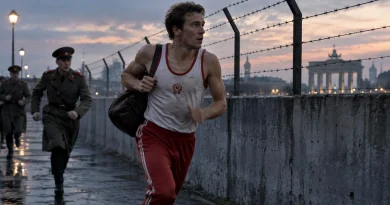
For athletes who reached the senior national level, the pressures intensified further. International competition was framed not merely as athletic contest but as ideological demonstration. Losing to an American swimmer or a West German gymnast carried implications that had no equivalent in non-state sport systems. Soviet athletes competed with the full weight of national prestige behind them — supported by enormous institutional infrastructure but also monitored and, in some cases, medically managed in ways they had limited power to refuse.
The systematic use of performance-enhancing substances — state-administered rather than individually pursued — represented the most troubling dimension of this pressure architecture. Evidence that emerged after the Soviet Union’s dissolution confirmed that certain doping programs were coordinated elements of the preparation model, particularly in strength and endurance disciplines. This does not erase the genuine scientific and coaching achievements the system produced, but it demands honest reckoning alongside any admiration.
- Athletes at senior level faced political and institutional pressure beyond standard competitive stress
- Failure in international competition carried ideological as well as sporting consequences
- Post-Soviet evidence confirmed state involvement in systematic doping across multiple disciplines
- The system’s human costs were real, even as its structural achievements remained historically significant
What the Soviet Model Left Behind — and Why It Still Matters
The Soviet sports system did not simply end when the Union dissolved in 1991. It dispersed. Coaches trained within its methodology emigrated to North America, Western Europe, and Asia, carrying periodization frameworks and talent development philosophies into programs that had previously had no access to them. Nations that had competed against Soviet athletes in the 1970s and 1980s found themselves, a decade later, hiring the architects of that same system to rebuild their own.
Within Russia and the successor states, the structural inheritance was more complicated. Funding collapsed, the administrative hierarchy fragmented, and many specialized sports schools closed or survived in degraded form through the economic turbulence of the 1990s. What remained was institutional memory — coaching lineages, methodological traditions, and a cultural expectation of elite athletic production that proved more durable than the bureaucratic machinery that had generated it.
Contemporary Russian sport continues to draw from this inheritance. The talent identification frameworks, early specialization, and integration of sports science into national preparation programs are recognizably descended from the structures examined here. Understanding the Soviet system is not merely historical curiosity — it is essential background for anyone seeking to make sense of elite sport as it currently exists, not only in Russia but in any nation that absorbed, adapted, or consciously reacted against the model the USSR pioneered.
The broader lesson may be structural rather than ideological. What the Soviet apparatus demonstrated was that systematic investment in early identification, rigorous scientific methodology, and coherent administrative coordination produces elite athletic output at scale. That insight proved entirely portable across very different political systems — which is precisely why it outlasted the government that invented it.
For a deeper grounding in the periodization science that emerged from Soviet-era research and continues to shape elite training globally, the work documented through the Olympic Studies Centre offers valuable scholarly context on how these methodologies were adopted and evolved through successive Olympic cycles.
The medals, in the end, were evidence of something larger than athletic talent. They were evidence that a state had decided, with genuine seriousness and considerable resources, to treat the production of excellence as a system rather than a hope. That decision shaped competitive sport for generations — and its echoes have not yet fully faded.