The Soviet Sports Machine: How State Infrastructure Built Athletic Dominance
A State Built to Produce Champions: The Architecture of Soviet Sport
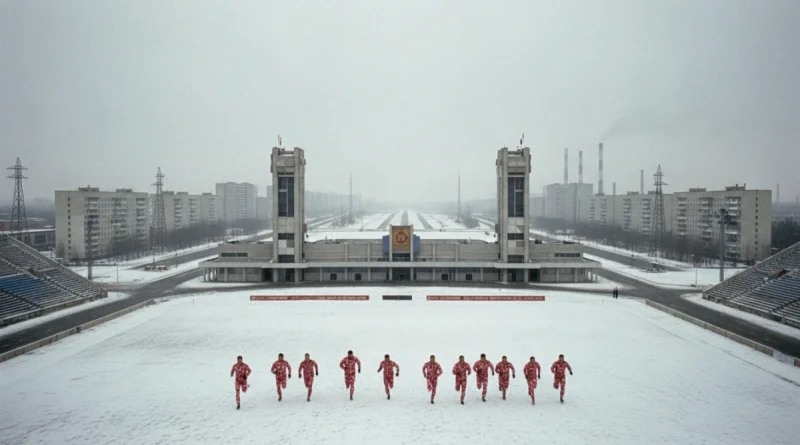
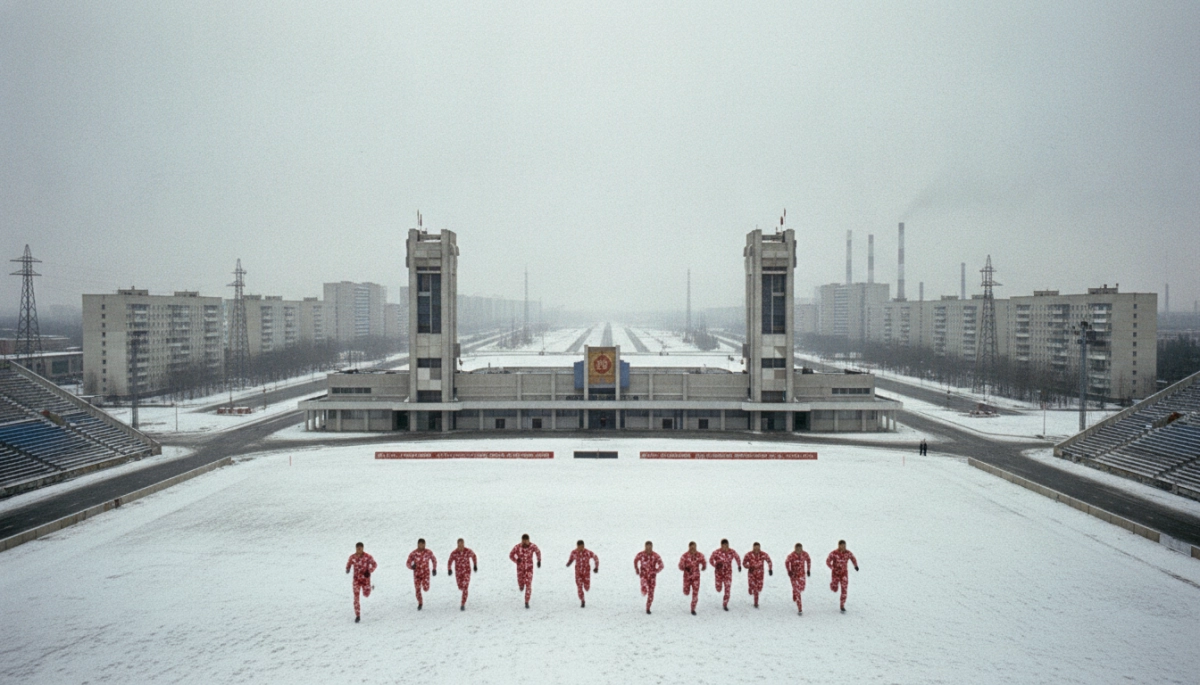
Long before sports science became a global industry, the Soviet Union was running the most ambitious state-sponsored athletic program in history. It was not built on talent alone — it was built on infrastructure: a deliberate, bureaucratically precise system designed to identify potential early, cultivate it systematically, and deliver results on the world stage. Olympic medal tallies were never accidental. They were the visible output of a machine engineered across decades, from government decree to gymnasium floor.
Understanding this system matters beyond nostalgia. Its methods, school networks, and scientific frameworks left a deep imprint on Russian sport that persists today. For anyone following the arc of Russian athletes in hockey, tennis, or football — or trying to understand how this country continues producing elite competitors despite significant external pressures — the Soviet blueprint is the essential starting point.
State involvement in sport was formalized almost from the earliest years of Soviet power. Lenin’s government established what would become the Russian State University of Physical Education in 1918, treating physical development as inseparable from the project of building a productive socialist citizenry. Sport was never purely recreational under this ideology. It carried political weight, and the infrastructure built around it reflected exactly that priority.
DYUSSH: The School Network That Manufactured Excellence
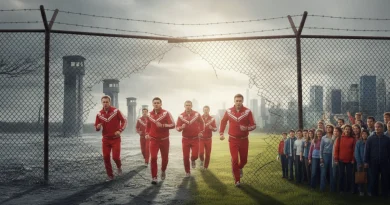
At the operational core of the Soviet system sat the DYUSSH — the Children’s and Youth Sports Schools. These were not extracurricular clubs or voluntary community programs. They were state institutions woven into the national education framework, tasked with a specific mission: locate young athletic talent and develop it with professional-grade intensity.
Children as young as six or seven could be identified through school-based physical testing and funneled into DYUSSH programs tailored to specific disciplines. Coaching staff were drawn from certified trainers and former competitive athletes. A child who showed promise would move through clear stages — from general conditioning to sport-specific training to, in elite cases, entry into higher-level specialist academies or national pipelines.
By the 1970s, over a thousand such schools were operating across Soviet territory, expanding through the following decade into the thousands and employing tens of thousands of trainers. The entire network operated under the USSR State Sports Committee, which set unified standards and performance benchmarks through the Unified Sports Ranking System.
- Early talent identification through standardized physical testing in general schools
- Sport-specific DYUSSH placement based on aptitude and body type assessments
- Tiered progression toward specialist academies and national selection pools
- Unified national benchmarks governing athlete classification at every level
What made this network particularly effective was not just its size but the bureaucratic chain binding it together. Voluntary Sports Societies — bodies aligned with different sectors of the Soviet economy, including labor unions, the military, and agricultural collectives — served as intermediary sponsors for specific schools. This created a layered system in which central directives were implemented locally, giving the network both ideological coherence and operational flexibility across a vast geography.
Sports Science as State Policy: The Soviet Laboratory Approach
The DYUSSH network delivered the raw material. What shaped it into champions was an equally formidable scientific apparatus — one that treated athletic performance as an engineering problem subject to systematic solution. Soviet sports science was funded generously, staffed by credentialed researchers, and treated with the same institutional seriousness as military or industrial research.
The flagship institution was the Central Institute of Physical Culture in Moscow, which functioned as the intellectual headquarters of Soviet training methodology. Researchers worked across disciplines not formally integrated in the West until decades later — physiology, biomechanics, psychology, nutrition, and the structured study of coaching optimization. The goal was to eliminate guesswork from athletic development entirely.
One of the most consequential contributions was the theory of periodization, systematized primarily by Lev Matveyev in the 1960s. Periodization divided the training calendar into structured cycles — macrocycles, mesocycles, and microcycles — each with distinct physiological objectives calibrated to peak performance at competition. It sounds straightforward now because it has become universal. At the time, it represented a genuine conceptual leap, moving coaching from intuition toward experimental science. Western coaches eventually adopted periodization wholesale, largely without acknowledging its Soviet origins.
- Periodization theory providing structured, phase-based training cycles now used globally
- Biomechanical analysis labs assessing technique through slow-motion film and force measurement
- Psychological conditioning programs addressing competitive anxiety and mental endurance
- Systematic recovery protocols integrating sleep, nutrition, and physical therapy
The psychological dimension deserves particular attention. Soviet sport psychologists developed detailed protocols for psychoregulation — deliberate training of an athlete’s mental responses to pressure, fatigue, and competitive adversity. This was structured clinical intervention, not motivational coaching. Figures like Aleksei Puni and Pyotr Rudik built bodies of research that quietly informed how Soviet coaches challenged and supported athletes throughout the development process.
Continuity After Collapse: How Soviet Architecture Survived the 1990s
When the Soviet Union dissolved, many assumed the athletic infrastructure would dissolve with it. Funding dried up almost immediately. Trainer salaries went unpaid. Facilities fell into disrepair. Some of the most technically sophisticated coaches in the world emigrated — to Germany, Israel, the United States, and Canada — inadvertently spreading Soviet methodology into the very competitive ecosystems that had once opposed it.
But the DYUSSH network was not dismantled. Local governments and regional sports committees absorbed many schools the federal state could no longer sustain, keeping a substantial portion operational through the worst economic turbulence. The training culture — early identification, structured progression, the expectation of serious commitment from young athletes — survived in the habits and professional norms of coaches formed entirely within the Soviet system.
Institutional cultures are not housed in buildings or budgets alone. They live in the professional assumptions and pedagogical instincts of practitioners. The coaches who staffed Russian sport through the 1990s were products of Soviet academies. They coached the way they had been coached and scouted with the criteria they had been trained to apply. Even as the formal state superstructure weakened, the methodological inheritance remained remarkably intact at the practitioner level.
The Putin-Era Reinvestment and Its Structural Logic
The systematic reinvestment in sport that accompanied Vladimir Putin’s consolidation of power after 2000 did not require building an athletic infrastructure from scratch — it required refunding and reorganizing one that had never fully stopped functioning. Federal targeted programs for sport development launched in the early 2000s explicitly referenced restoring, rather than constructing, a national system. Restoration is categorically faster and cheaper than origination, which explains how Russian sport rebounded at international level within a relatively compressed timeframe.
The DYUSSH network was recapitalized. New specialist academies were established in priority sports. The Russian State University of Physical Education was tasked with modernizing coaching certification while preserving the Soviet methodological heritage. International partnerships brought in elements of contemporary Western sports science, but these were layered onto rather than substituted for the existing framework — producing a hybrid of Soviet architecture updated with modern sports medicine and data analysis.
The Living Blueprint: What the Soviet System Still Tells Us
The story of Soviet and Russian athletic dominance is ultimately a story about institutional design — about what happens when a state treats the production of champions as a genuine policy objective. The DYUSSH network, the periodization laboratories, the psychoregulation protocols, the tiered classification systems: none of these were improvised. They were outputs of a coherent philosophy that placed systematic method above individual inspiration at every level of the development chain.
That philosophy did not expire with the Soviet state. It was absorbed by coaches who trained under it, transmitted to the athletes they subsequently developed, and dispersed — through emigration and international competition — into the global sporting ecosystem. In a meaningful sense, anyone running structured training cycles today is working within a conceptual framework that has Soviet fingerprints on it, whether or not they know it.
Within Russia itself, the inheritance is more direct and more complicated. Russian athletes continued to excel across gymnastics, weightlifting, wrestling, ice hockey, and tennis — disciplines in which the Soviet developmental pipeline had always been strongest and in which coaching knowledge accumulates across generations. The doping controversies that culminated in sanctioned Olympic participation revealed real institutional failures, but they did not negate the structural achievement the system represented at its best, nor fully interrupt the production of elite talent from schools and academies running, in various forms, since the 1950s.
What the Russian case illustrates with unusual clarity is how resistant institutional cultures are to sudden external disruption. Funding collapses, political upheaval, and international sanctions all tested the system severely. Each time, the methodological core survived in the professional habits of practitioners formed long before any given crisis arrived. This is not an argument for the Soviet model as a template to emulate — its costs in coercion, compromised athlete welfare, and pharmaceutical manipulation were significant and well-documented. But understanding how the system worked, and why so much of it endured, is indispensable for anyone seeking to understand elite sport in Russia and the countries where Soviet-trained coaches built second careers.
The Soviet athletic machine was a product of its political context, designed to serve ideological imperatives that no longer exist. But the methods it refined, the schools it built, and the coaching culture it embedded across a continent proved more durable than the ideology itself. Systems built with genuine methodological intelligence have a way of outlasting the purposes for which they were originally constructed — and Russian sport, contested and consequential as it remains, continues to demonstrate exactly that.