Soviet Athletes Who Defected to the West: Escapes That Defied the Cold War
When Medals Became State Property: The Cold War Stakes of Soviet Sport
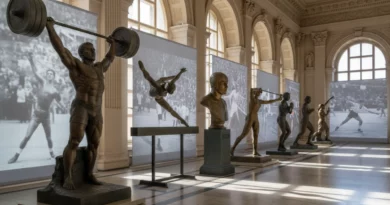
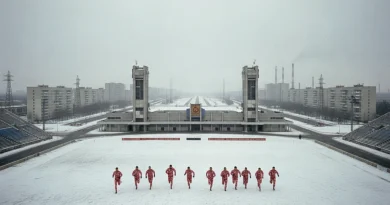
In the Soviet Union, sport was never just sport. Every gold medal served as a piece of evidence in an ideological argument, proof that the socialist system could produce stronger, faster and more disciplined human beings than the capitalist West. Athletes were trained in state academies, housed and paid through army or ministry clubs, and sent abroad only under close supervision. Their victories belonged to the nation first and to themselves a distant second.
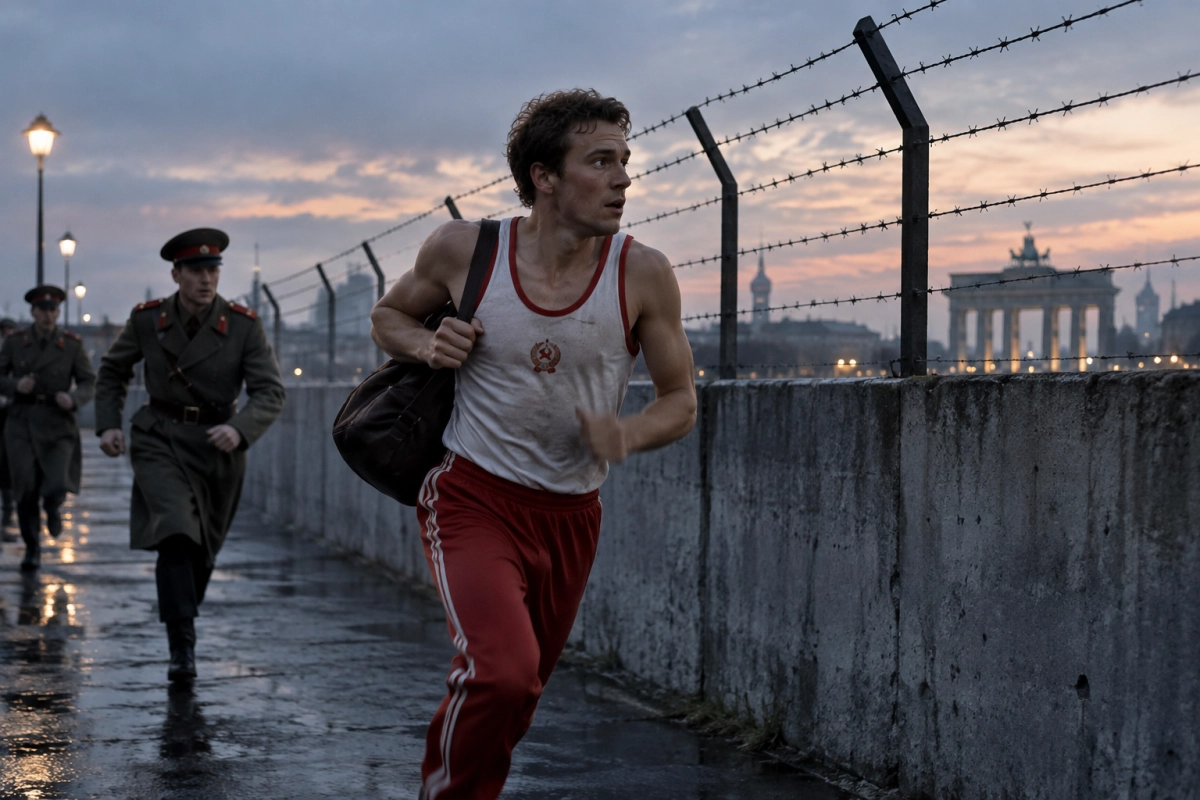
That arrangement made defection far more than a career move. An athlete who stayed behind at a foreign competition was treated as a traitor. The act humiliated the state on the very stage it used for propaganda, and it raised an uncomfortable question for audiences at home. If life in the USSR was so good, why would its heroes want to leave?
Across the region, fans still remember the era when sovjetski sportisti dominated ice rinks, tracks and gymnastics halls. Behind that dominance, however, lay a system that kept a firm grip on the people who made it possible. The handful who broke away, from graceful figure skaters to young hockey prodigies, exposed how tight that grip was and what it cost to escape it.
Ludmila Belousova and Oleg Protopopov: Olympic Champions Who Chose Exile
Few Soviet athletes seemed less likely to defect than Ludmila Belousova and Oleg Protopopov. The married pair from Leningrad won Olympic gold in pairs skating at Innsbruck in 1964 and again at Grenoble in 1968. They became national icons, admired for a lyrical, ballet-inspired style that changed how the world saw pairs skating. Where many rivals prized athletic tricks, the Protopopovs built programs around line, music and emotion.
Sidelined at Home
Their success did not guarantee official favor. By the late 1960s and into the 1970s, the Soviet skating establishment had shifted its support toward a younger generation and a more powerful, athletic style. The Protopopovs wanted to keep competing and performing on their own terms. They found themselves increasingly pushed to the margins, and their artistic independence did not sit comfortably with a bureaucracy that preferred compliant champions.
Their frustration grew. They were still world-class performers in their forties, yet they had little control over where, when or how they could skate.
The Break in Switzerland
The opportunity came in 1979, while the couple were touring in Switzerland. Rather than return to Leningrad, they requested political asylum. Sources differ on the precise date, but the outcome was clear. Two of the most celebrated figures in Soviet winter sport had walked away from the system that made them famous.
Moscow’s response was swift and characteristically quiet. The Protopopovs were not publicly debated so much as erased. They were omitted from official histories, and their names were missing from a 1985 directory of Soviet Olympians, as though their gold medals had never existed. In Switzerland they settled into a new life and kept skating in shows well into old age, a living rebuke to the idea that their careers had belonged to the state.
Their exit was a quiet one, driven by artistic pride and middle-aged frustration. A decade later, a very different kind of defection would unfold. This one involved a 20-year-old hockey star, a secret rendezvous in Stockholm and the full attention of the KGB.
Alexander Mogilny: The Stockholm Escape That Shook Soviet Hockey
Alexander Mogilny was everything the Soviet hockey machine hoped to produce. Quick, creative and ferociously skilled, he had already won Olympic gold at Calgary in 1988 while still a teenager. He played for CSKA Moscow, the Red Army club, which meant he was formally a serving soldier as well as an athlete. That detail would shape how the state responded to what he did next.
A Plan Made Behind Closed Doors
The Buffalo Sabres had quietly drafted Mogilny in 1988, a speculative pick at a time when Soviet players were not free to join the NHL. In May 1989, after the Soviet team won the World Championship in Stockholm, Mogilny slipped away from his teammates and met Sabres officials, who helped him travel to North America. He was 20 years old and had left behind his family, his club and his country with almost no warning.
Because Mogilny held military rank, Soviet authorities treated his departure as desertion rather than simple defection. He was denounced at home, and the threat of criminal charges hung over him. For a time the matter became a diplomatic and legal tangle, eventually settled through negotiation that allowed him to continue his career in peace.
From Traitor to Star
In Buffalo, Mogilny struggled at first with language, culture and even a fear of flying. Yet his talent proved impossible to contain. His 76-goal season in 1992–93 made him one of the most feared scorers in the league, and he later won the Stanley Cup with New Jersey. The player branded a deserter in Moscow had become proof that Soviet-trained skill could flourish in the West.
Sergei Fedorov: The Quiet Exit in America
Mogilny’s escape opened a door that others soon walked through. In the summer of 1990, Sergei Fedorov, a CSKA teammate and another rising star, was in the United States with the Soviet national team for the Goodwill Games. The Detroit Red Wings, who held his NHL rights, had been cultivating contact for some time. One evening Fedorov left the team hotel and was flown to Detroit, where he began a new life almost overnight.
Fedorov’s departure drew less outrage than Mogilny’s, partly because the Soviet system itself was cracking. By 1990 the state was weakening, and veterans such as Viacheslav Fetisov and Igor Larionov had already fought for, and won, official permission to play in North America. Defection no longer looked like a betrayal of an unbreakable empire. It looked like a young man getting ahead of history.
His career justified the gamble. Fedorov won the Hart Trophy as the NHL’s most valuable player in 1994 and lifted the Stanley Cup three times with Detroit, playing a central role in a team built around a celebrated Russian contingent. Where the Protopopovs had been erased from official memory, Fedorov became a figure Russian fans followed with pride, a sign of how quickly the meaning of leaving had changed.
Rewriting the Record: How Home Came to Terms With Its Defectors
The collapse of the Soviet Union in 1991 changed the story of every athlete who had left. The label of traitor faded as the state that imposed it disappeared, and a new Russia began quietly reclaiming the champions its predecessor had tried to forget.
The Protopopovs, who later became Swiss citizens, were eventually welcomed back. In 2003 they returned to St. Petersburg, the city once known as Leningrad, where they had first learned to skate, and appeared before audiences who greeted them as legends rather than deserters. Their Olympic legacy in pairs skating now stands openly in the record from which it was once removed. They spent their final years in Switzerland, still associated with the ice until the end.
The hockey players followed a different arc. Mogilny’s name, once spoken in Moscow with contempt, came to stand for the pioneering generation that proved Soviet-trained players could become NHL stars. Fedorov went further still. He later returned to CSKA Moscow, the club he had left in the middle of the night, this time as an executive and coach. Few endings could better capture how completely the meaning of his departure had been rewritten.
The Price of Freedom and the Weight of a Flag
Seen side by side, these stories trace the slow unravelling of a system. In 1979 two Olympic champions could leave and be erased almost without a trace. By 1990 a young star could walk out of a hotel and find that history was largely on his side. The shift says as much about the Soviet state as it does about the athletes who defied it.
What unites them is a simple claim that the Soviet system could never fully accept: a talent belongs first to the person who carries it. Belousova and Protopopov asserted it through art, Mogilny through a daring escape and Fedorov through quiet timing. Each paid a price in family, homeland or reputation, and each left a mark that outlasted the regime that tried to own their success.
Their medals were once treated as state property. Today they are remembered for something the state could never award: the courage to decide for themselves where, and for whom, they would compete.