Russian and Soviet Ice Hockey: A Legacy That Reshaped the Global Game
From Frozen Ponds to a Global Power: How Soviet Hockey Began
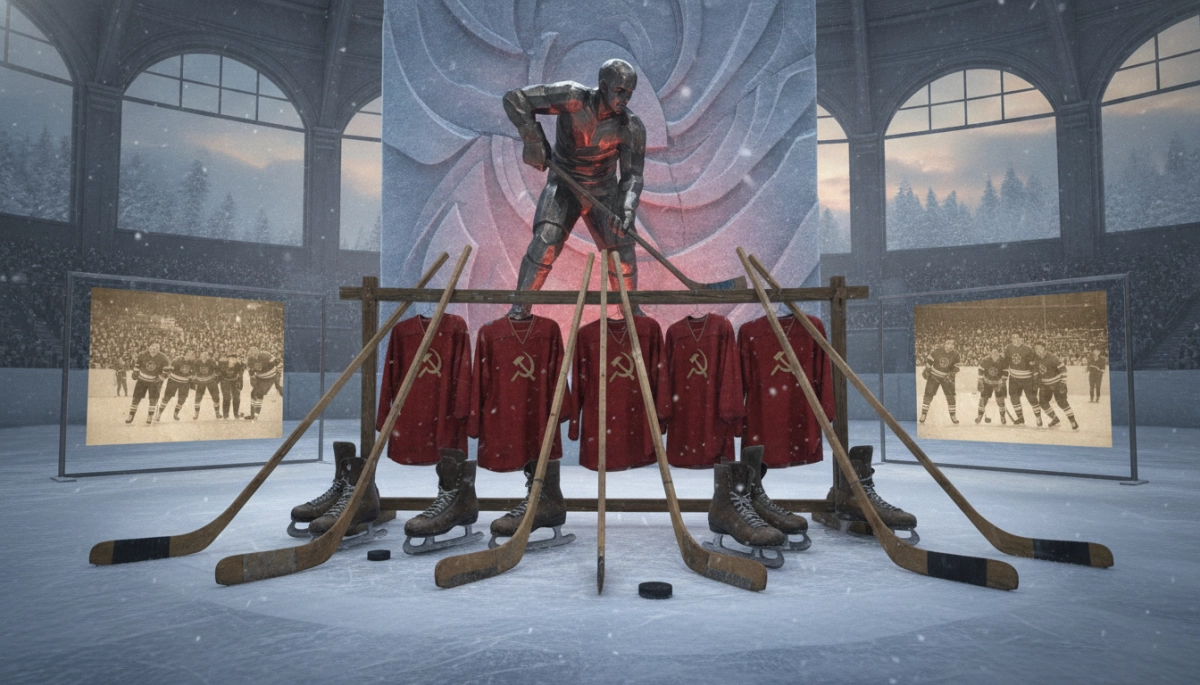
Few stories in sport carry the weight and drama of Soviet ice hockey. What began as an unfamiliar discipline in a country better known for chess grandmasters and track-and-field dominance transformed, within a single generation, into something that permanently altered the way the world understood the game. The Soviet Union did not simply adopt ice hockey — it reimagined it from the ground up, building a program so methodical and technically sophisticated that its influence still runs through every major hockey nation today.
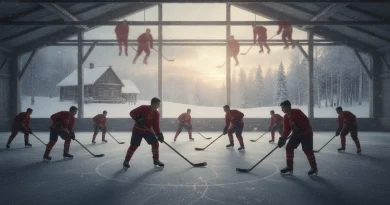
The foundations were laid in the late 1940s, when Soviet sports authorities under Anatoly Tarasov and Arkady Chernyshev began developing a distinctly Soviet approach to a sport they had only recently started playing at elite level. Tarasov drew as much from ballet, chess, and military strategy as from traditional coaching. He rejected the physical, grinding North American style and instead emphasized collective movement, rapid puck rotation, and relentless conditioning. The results were almost immediate.
By the early 1950s, the Soviet national team was already a formidable force, producing players of exceptional technical quality — Vsevolod Bobrov, Valeri Kharlamov, Vladislav Tretiak — whose names became synonymous with excellence long before Western audiences had the chance to watch them play. Russian hokej was not merely a sport. It was a statement of national capability and ideological confidence.
Cold War on Ice: Dominance, Drama, and the Summit Series
The tension between Soviet and North American hockey reached its peak in 1972, when the Summit Series brought the Soviet national team face-to-face with the best professionals Canada had to offer. Canadian fans, who had assumed their country’s superiority was beyond question, watched the Soviets match and at times outplay a team stacked with NHL stars. The Soviet style — fluid, intelligent, almost balletic — exposed tactical gaps in the North American game that coaches had never been forced to confront before.
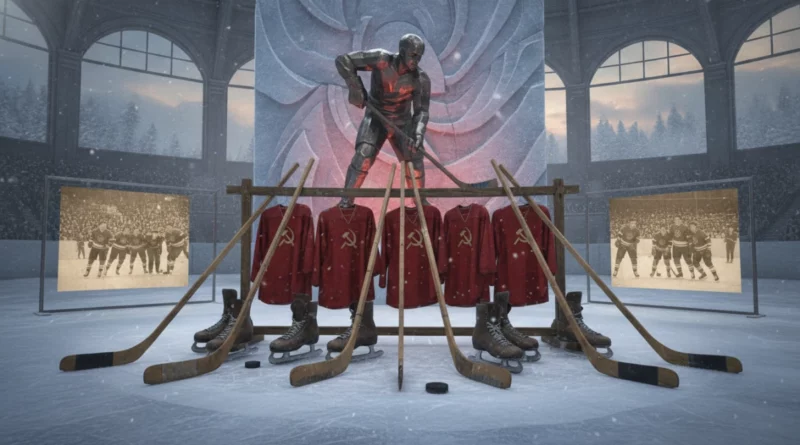
The Soviets went on to dominate international competition throughout the 1970s and 1980s, collecting Olympic gold medals and World Championship titles with extraordinary consistency. The “Red Machine” was built not on individual brilliance alone but on a deep, coordinated system endlessly rehearsed. Players cycled through CSKA Moscow and other elite clubs, refining their game within a structure that prioritized collective intelligence over personal glory.
Kharlamov’s skating ability drew comparisons that transcended sport. Tretiak, widely regarded as the greatest goaltender of his generation, was so respected that NHL teams attempted to draft him even when the Soviet system made it virtually impossible for him to leave. The Cold War rivalry gave hockey some of its most compelling theater — and forced both sides to evolve.
The Collapse of an Empire and the Opening of the Floodgates
When the Soviet Union began its dissolution in the late 1980s, the consequences reached into every corner of Soviet life — including the rinks where the Red Machine had been built over four decades. The state had maintained an almost total grip on its players. Contracts did not exist in any Western sense. Salaries were nominal. Passports were controlled. Defecting to the NHL was treated not merely as a professional decision but as an act of political betrayal.
The first cracks appeared before the formal dissolution. Sergei Pryakhin became the first Soviet player officially permitted to join an NHL team in 1989, a symbolic opening that suggested the old walls were weakening. Alexander Mogilny defected dramatically that same year before official channels fully opened. Pavel Bure, Sergei Fedorov, and dozens of others followed through whatever route was available. Once the Iron Curtain lifted, the movement became a torrent.
The NHL was fundamentally transformed by what arrived. The Detroit Red Wings became synonymous with the influx, assembling a core that won multiple Stanley Cup championships. The Russian Five — Fedorov, Igor Larionov, Slava Fetisov, Slava Kozlov, and Vladimir Konstantinov — played with a coordinated elegance that felt, unmistakably, like an echo of Tarasov’s original philosophy transplanted into a North American arena.
What the Soviets Gave the Game — and What the Game Gave Back
The deeper legacy of the Soviet hockey program is not measured purely in championship banners or career statistics. The more enduring contribution is philosophical. Before Soviet hockey forced a confrontation with its methods, the dominant coaching orthodoxy in North America treated hockey largely as a physical contest — won in the corners, along the boards, through sheer force of will. The Soviet approach introduced a fundamentally different premise: that space, timing, and collective movement could be as decisive as size and aggression.
That idea did not arrive quietly. It took years of embarrassment on the international stage before North American programs began genuinely absorbing the lessons. Gradually, practice structures evolved. Long, grinding scrimmage sessions gave way to structured skill work, small-area games, and pattern-based drills that bore more than a passing resemblance to what Tarasov had been running in Moscow decades earlier.
The Coaching Pipeline and Its Quiet Revolution
What often goes unacknowledged is the degree to which Soviet coaching methodology spread through indirect channels — through European players trained in Soviet-influenced systems who later moved into NHL locker rooms, through development staff who studied available footage obsessively, and through players who brought their training habits across the Atlantic. Larionov, famously thoughtful about the game’s intellectual dimensions, became a living transmission point for a philosophy that had no natural home in the NHL’s traditional culture.
The Swedish and Finnish programs absorbed these influences most systematically, building training academies that acknowledged the Soviet blueprint while adapting it to their own resources. When players from those programs arrived in the NHL in large numbers through the 1990s and 2000s, they completed a feedback loop that had begun on frozen outdoor rinks in postwar Moscow and eventually touched every professional franchise in North America.
A Legacy Etched Into the Ice: Russia’s Enduring Mark on the Global Game
More than three decades have passed since the Soviet state dissolved and its hockey machine scattered talent across professional leagues worldwide. Yet the imprint of that program remains stubbornly visible in the way the game is played, taught, and understood at every level. Watch a skilled winger accelerate through the neutral zone with a subtle shoulder feint, buying a half-second of space, and you are watching something traceable — through a long chain of influence — back to Luzhniki and the notebooks of Anatoly Tarasov.
Russian players have continued arriving in the NHL with each successive generation. Alexander Ovechkin’s shot — perhaps the most lethal in the modern game — is the product of a development system that still prioritizes individual skill within a collective framework. Evgeni Malkin’s ability to hold a puck under pressure and see plays before they materialize reflects a cognitive approach that Soviet coaches were cultivating before most of his NHL contemporaries were born. Nikita Kucherov’s creativity in tight spaces carries the same DNA.
The KHL, founded in 2008 as a successor to the old Soviet league system, represents an attempt to reassert Russian hockey’s gravitational pull on the global game. It has attracted European and North American players seeking competitive hockey outside the NHL’s reach and provided a destination for Russian stars unwilling or unable to navigate life abroad. Whether it will ever rival the NHL in prestige remains unsettled. But its existence confirms that the infrastructure built by Soviet sports authorities has never simply disappeared.
What the Soviet program ultimately demonstrated is that hockey is not a finished game. It is a system of possibilities, and the way those possibilities are understood depends entirely on the philosophies, cultural values, and institutional structures surrounding the sport at any given moment. The Soviet Union approached hockey as a problem to be solved through intelligence and collective will. That approach changed what the game could be — and no subsequent chapter in hockey history has been written entirely free of its influence.
For anyone who wants to explore the deeper tactical and historical dimensions of the Soviet system and the players it produced, the International Ice Hockey Federation’s official history archive offers a well-documented starting point spanning the full arc of international competition.
The frozen ponds are long gone. The state that built the Red Machine no longer exists. But the game it left behind — faster, smarter, and richer for the confrontation — carries that inheritance forward every time a puck drops on any rink in the world.