The Soviet Sports Machine: How the USSR Built Athletic Dominance From the Ground Up
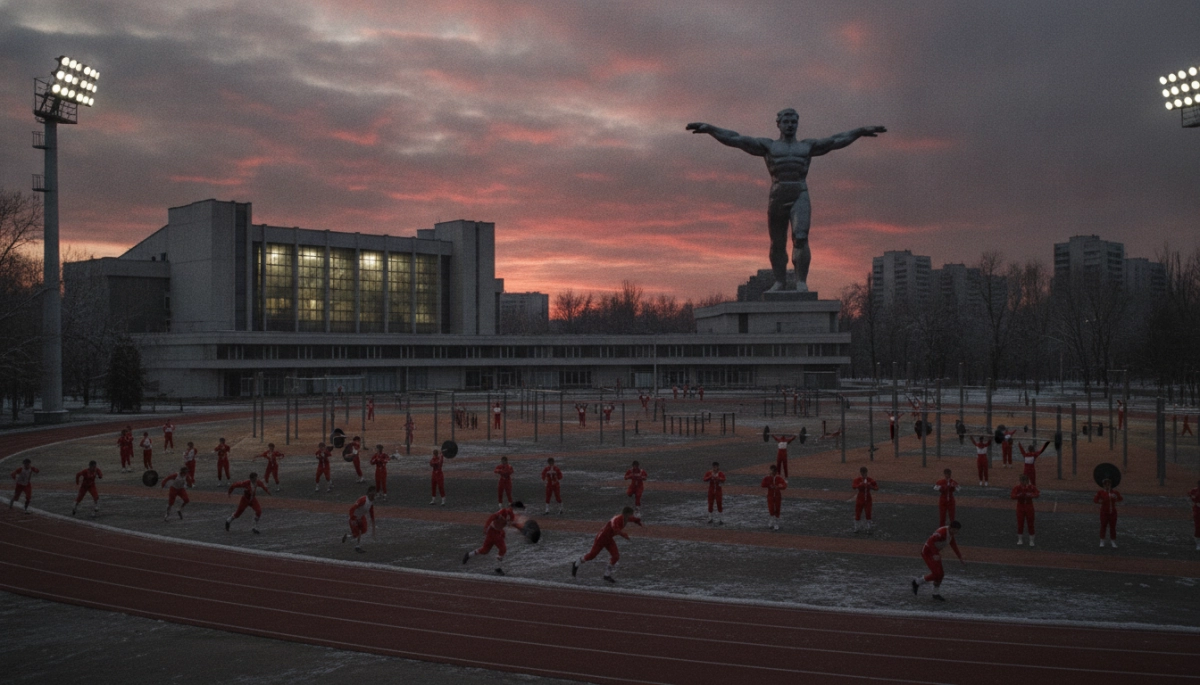
A Nation That Treated Sport as State Policy
When Soviet athletes dominated Olympic medal tables decade after decade, Western observers often attributed it to natural talent or national pride. The reality was far more deliberate. Behind every gold medal stood an elaborate, centrally controlled machine built from policy, bureaucracy, and systematic investment with no real equivalent in the democratic West. Understanding how that machine worked is essential to understanding not just Soviet history, but the DNA of Russian sport today.
The Soviet state treated athletic achievement as an extension of ideological competition. Winning on the track or in the pool was proof that socialism worked — that a planned society could produce superior human beings. This framing gave sport an almost military priority within government budgets, and the infrastructure that emerged was extraordinary in its scope and ambition.
Sports Schools, Talent Pipelines, and the Architecture of Development
The foundation of Soviet athletic success was laid not in stadiums, but in schools. Across the USSR, a nationwide network of specialized sports schools — known as Detsko-Yunosheskie Sportivnye Shkoly, or DYUSS — identified and cultivated athletic talent from childhood. Children as young as six or seven were screened for physical aptitude, and those who showed promise were funneled into structured programs at state expense. Tuition, equipment, coaching, and often accommodation were covered entirely. The financial barrier that limits elite development in most countries simply did not exist.
Estimates suggest tens of thousands of such institutions operated across Soviet territory at the system’s peak, enrolling millions of children. Each school fed into a regional hierarchy, and the most talented athletes eventually reached central training centers where elite coaches and sports scientists took over. The pyramid was steep, the washout rate high — but the sheer volume of participants meant exceptional talent was rarely missed.
What made this pipeline particularly effective was its integration with scientific research. Soviet sports administrators understood early that raw talent required systematic development, and they invested heavily in sports science to ensure every stage of training was grounded in measurable, reproducible methodology.
The Role of VNIIFK and Soviet Sports Science
At the intellectual center of this enterprise sat the All-Union Scientific Research Institute of Physical Culture, known by its acronym VNIIFK. Established in Moscow, the institute functioned as a sports R&D laboratory for the entire Soviet system. Physiologists, biomechanists, psychologists, and nutritionists worked alongside coaches to develop training programs that were periodized, data-driven, and refined through continuous competition feedback.
VNIIFK researchers pioneered periodization theory — the structured cycling of training intensity and recovery now standard in professional coaching worldwide. Soviet sports scientists published extensively, though their most sensitive work remained classified. Their findings shaped not only how Soviet athletes trained, but how the global conversation about elite athletic preparation eventually evolved.
The institute also coordinated across disciplines, ensuring innovations in one sport could be adapted and transferred to others. It is within this same institutional culture — rigorous, centralized, and unapologetically results-oriented — that the darker elements of Soviet sporting infrastructure also took root.
The Pharmacological Dimension: State-Sponsored Doping
The scientific rigor that defined Soviet training methodology did not stop at nutrition charts and biomechanical analysis. Within the same institutional framework that produced periodization theory, a parallel and clandestine program operated — one that used performance-enhancing substances not as the gamble of individual athletes, but as an officially sanctioned component of state sporting strategy.
Soviet doping programs were not improvised. Sports physicians worked under state direction to develop substance regimens, timing their use around competition schedules and masking protocols designed to evade international testing. Anabolic steroids were among the earliest tools deployed, particularly in strength and power sports, but the program expanded over decades to encompass a broad pharmacological arsenal.
What distinguished the Soviet approach was its systemic nature. Athletes were rarely given a choice. Substances were administered as part of the official training plan, often without full disclosure to the athletes themselves. Doctors within the sports school hierarchy were embedded participants, their professional obligations subordinated to the performance imperative set by the state.
The ethical consequences were severe and long-lasting. Health complications surfaced years after competitive careers ended, with no recourse against a system that never acknowledged what it had done. When Soviet archives became partially accessible after the USSR’s collapse, the scale of what had operated beneath officially celebrated achievement became clearer — though the full picture has never been entirely reconstructed.
Coaching Culture and the Human Architecture of the System
Numbers and institutions alone do not produce champions. The Soviet system invested equally in developing coaches, treating the profession as requiring genuine expertise. Dedicated pedagogical institutes trained coaches with the same rigor applied to engineers or medical professionals.
The coach-athlete relationship carried a distinctly hierarchical character. Coaches wielded enormous authority — over training content, competition selection, and in some cases living arrangements and financial support. This dynamic produced extraordinary dedication in many cases, but also created conditions in which abuse, both physical and psychological, could flourish unchecked.
Despite those troubling dynamics, the Soviet coaching tradition produced genuine pedagogical innovation. Many of the world’s most influential coaching methodologies in gymnastics, weightlifting, wrestling, and track and field trace direct lines back to Soviet practitioners. Coaches who emigrated after the Soviet collapse carried that intellectual inheritance globally, spreading Soviet training philosophy into programs across North America, Europe, and Asia — often with remarkable results that testified to the underlying validity of the methods, even when separated from their more coercive context.
The Post-Soviet Inheritance: Continuity Beneath the Surface
When the Soviet Union dissolved in 1991, the institutional infrastructure of its sporting machine did not simply evaporate. Buildings remained, coaches stayed active, and organizational culture persisted within successor institutions. Russia retained much of the underlying apparatus — including VNIIFK, which continued operating under adjusted mandates in the new political environment.
What changed was the funding model. The reliable flow of state resources was disrupted, and many sports schools contracted sharply through the economically turbulent 1990s. Yet the ambition did not diminish. Russian sport under Vladimir Putin’s administration actively sought to rebuild Soviet-era dominance, directing state resources back into elite development and framing international success in terms that echoed earlier ideological priorities. The mechanisms of control, selection, and centralized coordination were consciously revived — and so, as international investigations would reveal, were some of the pharmacological practices. The 2015 McLaren Report and subsequent bans affecting Russian athletes made clear that what appeared to be a post-Soviet sport system had, in critical respects, never fully departed from Soviet operating logic.
- VNIIFK continued functioning as a research institution after 1991, retaining institutional memory from the Soviet period
- Many former Soviet republics maintained parallel systems drawing directly on Soviet methodological traditions
- Russian investment in elite sport infrastructure accelerated substantially from the mid-2000s onward
- International coaching migration spread Soviet training philosophy globally while the domestic system rebuilt
The legacy, in other words, is not merely historical. It is living infrastructure — in some cases admirable, in others deeply troubling — that continues to shape what Russian athletes achieve, and at what cost.
What the Soviet Machine Ultimately Tells Us About Sport and Power
The Soviet sporting system was never really about sport. It was about demonstrating the organizational supremacy of a political idea — the conviction that a centrally planned state could outperform any rival if it applied sufficient will, resources, and scientific discipline. Athletics happened to be a theater in which that demonstration could be staged with global visibility and clear scorekeeping. The gold medals were never just gold medals.
The genuine innovations — periodization methodology, systematic talent identification, the professionalization of coaching as a scientific discipline — deserve recognition as real contributions to human athletic development. Sports scientists and coaches around the world still draw, often without knowing it, on conceptual foundations laid in Soviet laboratories and training halls. That influence is diffuse, durable, and largely stripped of its original ideological freight.
But the system that produced those innovations was inseparable from one that administered substances to athletes without their informed consent, embedded physicians into institutionalized deception, and subordinated individual health to short-term national prestige. Those two realities cannot be cleanly partitioned. They grew from the same soil — the same centralized authority, the same subordination of the individual to the collective outcome, the same immunity from external accountability.
The most important lesson the Soviet sporting machine offers is not strategic but ethical. Unchecked institutional power, even when directed toward genuinely impressive ends, generates a gravitational pull toward excess that is very difficult to resist from within. Every credible reform of elite sport infrastructure since the Cold War has, at its core, been an attempt to build in the accountability mechanisms that the Soviet system deliberately excluded. The World Anti-Doping Agency exists, in no small part, as a direct institutional response to what Soviet — and later Russian — sport demonstrated could happen when performance and power operated without meaningful oversight.
Russia’s ongoing negotiation with that legacy — simultaneously proud of the achievements, defensive about the methods, and structurally resistant to the transparency that would allow a clean break — reflects a contradiction that the original architects of the system built into it from the beginning. A machine designed to win at any cost does not easily learn to count some costs as too high. That tension remains unresolved, and it will continue shaping Russian sport, and the global conversation around elite athletic ethics, for years to come.