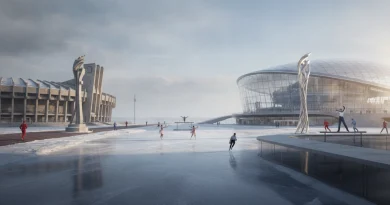
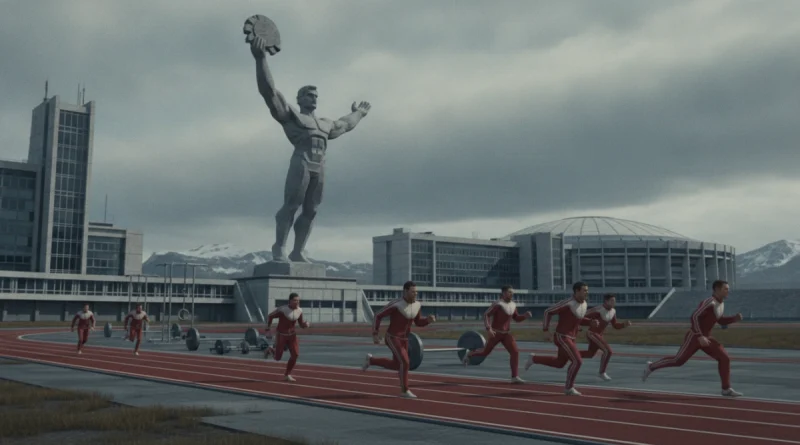
The Soviet Sports Machine: How the USSR Built an Athletic Empire That Still Shapes Russian Sport Today
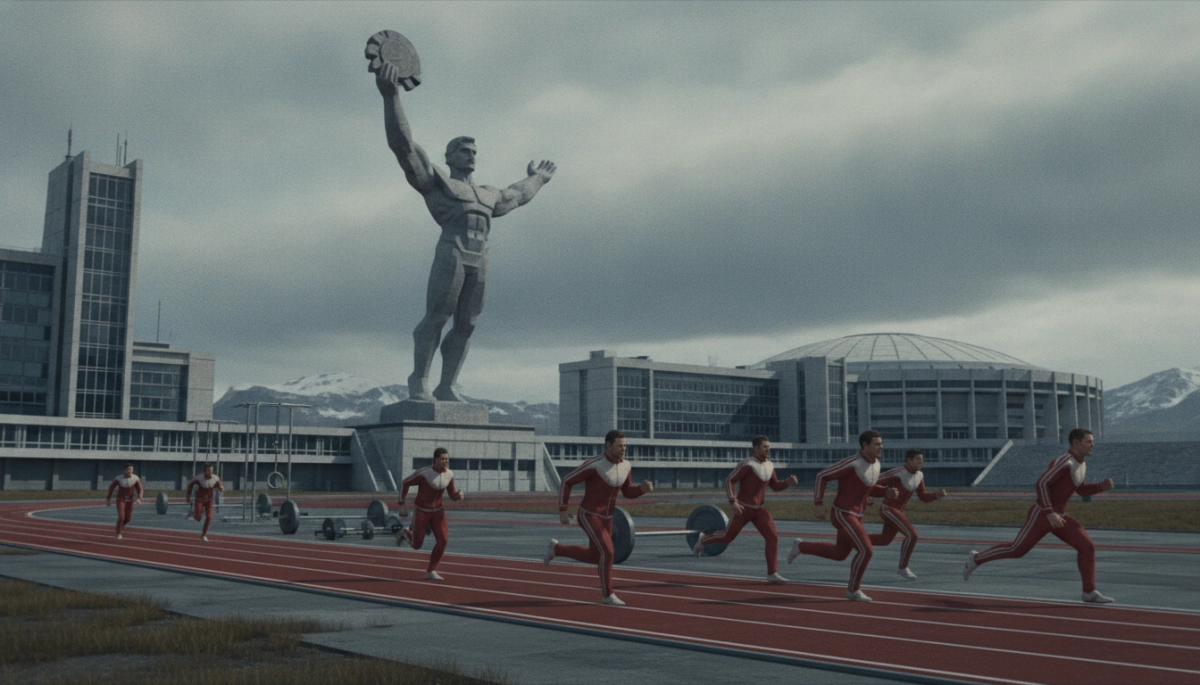
A System Built to Win: The Soviet Union’s Architecture of Athletic Excellence
No nation in the twentieth century industrialized the pursuit of sporting glory quite like the Soviet Union. What emerged from the post-war decades was not simply a collection of talented individuals, but an entire civilization of sport — methodically designed, centrally funded, and relentlessly refined. Soviet athletes consistently dominated medal tables from Helsinki 1952 onward, across gymnastics, weightlifting, wrestling, and a dozen other disciplines. Understanding how that was achieved requires looking beyond the podium and into the machinery that produced the champions.
The foundation was institutional. The Soviet state treated athletic achievement as an extension of ideological prestige, meaning resources flowed into sport at a scale unmatched in the Western world. Sports schools — sportivnye shkoly — were established in virtually every major city, identifying talented children early and channeling them into specialized programs. These were not after-school clubs. They were full educational environments where coaches, physicians, nutritionists, and psychologists worked under the same roof.
At the apex sat institutions like the Central Institute of Physical Culture in Moscow, which served simultaneously as a university, research laboratory, and coaching academy. It trained the trainers — producing generations of coaches whose methodologies would ripple across Soviet republics and, eventually, across the world. The knowledge produced there was state property, treated with the same seriousness as military research.
Methodology Over Talent: How Soviet Sports Science Redefined Elite Training
What distinguished the Soviet approach was not the volume of athletes it processed, but the scientific rigor applied at every stage. Soviet sports scientists pioneered periodization — the structured cycling of training loads across a competitive calendar — decades before it became standard in Western athletics. This framework gave coaches the tools to maximize peak performance at precise moments: the Olympic final, the world championship, the decisive match.
Biomechanics, physiology, and psychology were integrated into daily training rather than treated as academic abstractions. Recovery protocols, load management, and psychological preparation were core components of every plan, documented and adjusted through ongoing measurement. For many disciplines, this represented a paradigm shift that the rest of the world spent years catching up to.
- Periodization models developed in Soviet institutes became the global standard in strength and conditioning
- Early talent identification allowed systematic recruitment from a population of hundreds of millions
- Integrated coaching academies ensured methodological consistency across republics and disciplines
- Sports psychology was formalized as a coaching tool long before it gained mainstream acceptance in Western sport
The effects on international athletics were profound and lasting. Many coaches who trained under the Soviet system later emigrated or consulted abroad, carrying these methods into foreign leagues and national programs. The Soviet blueprint became, in many ways, the invisible architecture beneath modern high-performance sport worldwide.
The Collapse and the Continuity: Soviet Sport After 1991
When the Soviet Union dissolved in December 1991, the institutional architecture did not disappear overnight — but it fractured. Funding evaporated. Facilities fell into disrepair. The centralized pipeline that had moved talent from regional sports schools to national training centers was severed by newly drawn borders, and athletes and coaches suddenly belonged to fifteen different countries, each scrambling to build sporting identities of their own.
For Russia, the 1990s represented an uncomfortable paradox. The nation retained the largest share of Soviet infrastructure but lacked the economic stability to fund it meaningfully. Coaching salaries collapsed, driving experienced minds toward private academies or foreign programs. The pipeline that had once run with bureaucratic precision became inconsistent, dependent on regional patronage rather than state design.
Yet the methodology survived, carried forward by coaches who had spent entire careers inside the system. What the Soviet Union had embedded was not merely a set of programs that could be switched off by government decree — it was a professional culture, a way of thinking about athletic development that persisted long after the funding structures changed beyond recognition. The emphasis on periodization, early specialization, and psychological conditioning visible in Russian sport today are direct inheritances from that era.
The Resurgence of State Sport and the New Infrastructure
The recentralization of Russian sport accelerated in the 2000s, as growing political stability brought renewed state investment. This was not a simple restoration of Soviet structures — it was selective rebuilding, incorporating lessons from international development while reasserting centralized oversight. Federal programs targeted Olympic disciplines directly, channeling resources into facilities, coaching appointments, and scientific support in a manner that consciously echoed the Soviet model.
New national training centers were constructed or modernized, consolidating elite athletes in environments where medical, scientific, and coaching expertise existed under one roof — a structural philosophy borrowed almost unchanged from the Soviet sports school model. The logic was the same even where the branding was new: concentrate resources, measure outcomes, and manage development with institutional discipline.
Sports Science in the Modern Russian Context
Within these rebuilt structures, the scientific tradition of Soviet-era sport found new expression. Russian institutions continued refining approaches to load management and recovery, now integrating contemporary technologies — biomechanical analysis software, cardiac monitoring, oxygen utilization testing — that Soviet researchers had theorized without the tools to fully implement. The conceptual framework was inherited; the instruments were modern.
- Soviet-era periodization theory was updated and re-integrated into federal coaching curricula after 2000
- National training centers in weightlifting, combat sports, and gymnastics were rebuilt along Soviet structural lines
- Sports psychology programs were formally reinstated in elite athletic preparation
- Collaboration between university research departments and national federations echoed the Central Institute model
The coaches shaping Russian programs in the 2000s and 2010s were, in many cases, the last generation trained entirely within the Soviet system. They carried methodological knowledge that no archive fully captures, ensuring the transition between eras was never quite the complete rupture that political history might suggest.
Export and Influence: The Global Reach of Soviet Training Philosophy
One of the most underappreciated dimensions of the Soviet athletic legacy is how thoroughly it dispersed across international sport. Coaches who emigrated to North America, Western Europe, and beyond brought training philosophies refined over generations inside closed Soviet institutions. In weightlifting, gymnastics, wrestling, and swimming, the fingerprints of Soviet methodology can be traced across programs that would not publicly acknowledge the debt.
American strength and conditioning was transformed in significant part by the adoption of Soviet periodization models — frameworks documented in Soviet research literature long before they crossed into Western coaching circles. The influence arrived indirectly: through translated texts, through émigré coaches, through athletes who had trained under Soviet-influenced programs and later became coaches themselves. What had been classified state knowledge became, over time, the shared vocabulary of global high-performance sport.
The Legacy That Outlasted the Flag
What the Soviet Union built in sport was, in the truest sense, a civilization within a civilization — a parallel world of laboratories, academies, and human expertise that operated with a coherence rarely matched before or since. It was designed for a specific political purpose, and it served that purpose efficiently. But the knowledge it generated proved far more durable than the ideology that commissioned it.
The methodological inheritance — periodization, integrated sports science, formalized psychological preparation, systematic talent identification — did not dissolve with the union that created it. It migrated into Russian sport, into successor states, and into the academies of nations that were once its rivals. The spread was quiet, often uncredited. But it was thorough.
Russia’s contemporary sporting identity remains inseparable from this history, even as it has been reshaped by post-Soviet transition, renewed state investment, and global controversies that have complicated its international standing. The coaches training athletes in Moscow today are, in intellectual lineage if not always in biography, heirs to a tradition forged in the Cold War and refined across decades of competitive pressure. The methods may wear different labels, but the underlying logic — measure everything, plan precisely, prepare the athlete as a complete system — is recognizably Soviet in its origins.
Understanding this continuity is not an exercise in nostalgia. It is an accurate account of how knowledge moves through time and across borders. The Soviet Union’s contribution to the science and practice of elite athletic development was genuinely substantial, and peer-reviewed research in sport science journals continues to trace these methodological lineages with growing precision. The ideas refined inside that system belong to no single era. They moved freely where the system itself could not — and they continue to shape the preparation of elite athletes in ways the original architects would have recognized immediately.